

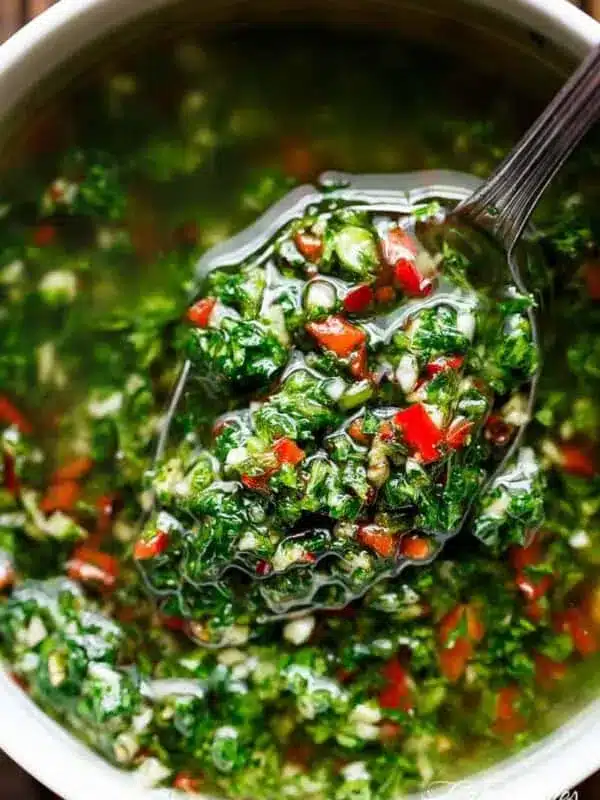
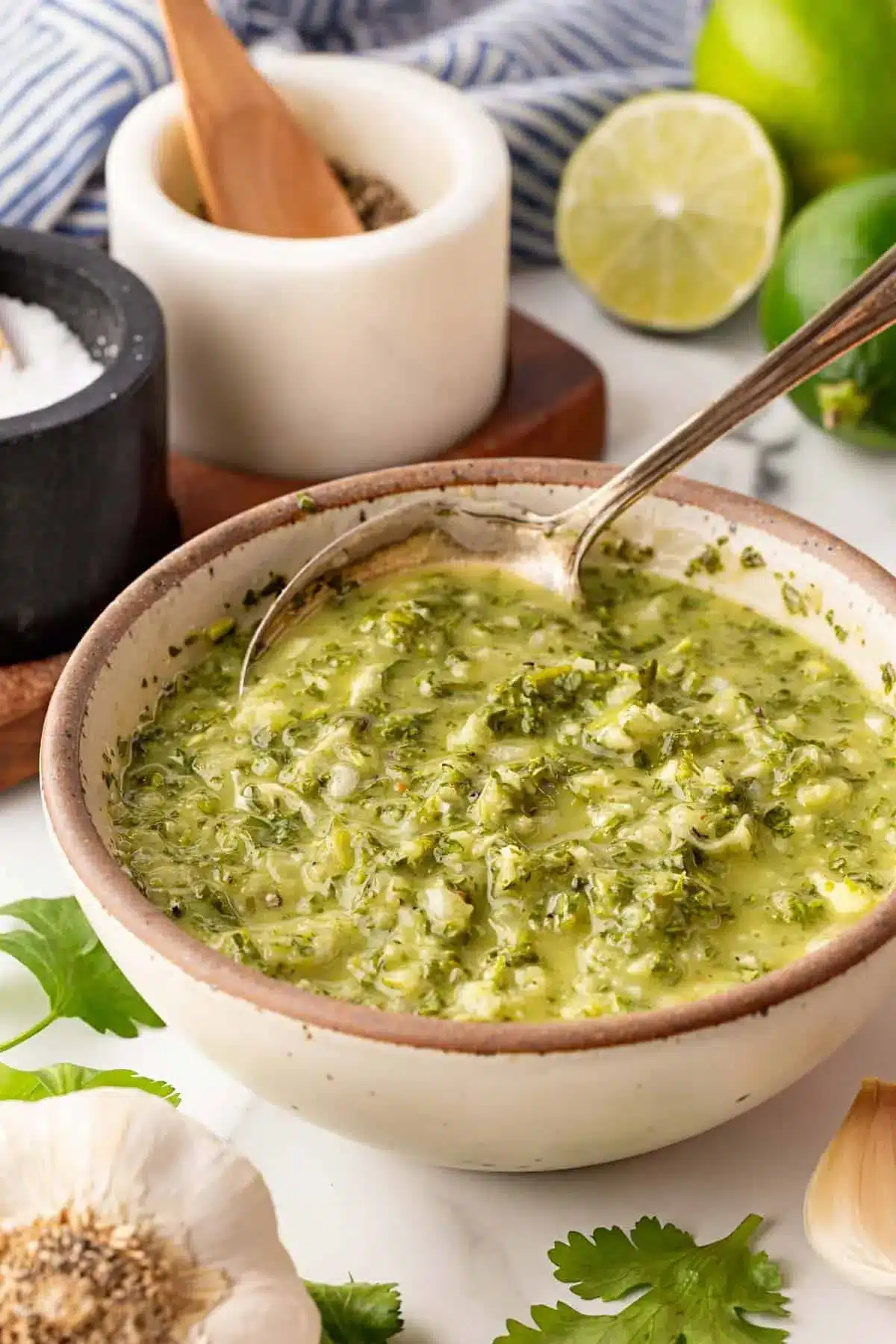
This Chimichurri Sauce is a bright, tangy, herb-packed condiment that brings fresh flavor to grilled steak, chicken, seafood, and roasted vegetables. Made with parsley, cilantro, garlic, olive oil, lime juice, and red wine vinegar, it comes together quickly in a food processor or blender.
Y’all know how some folks always gotta have ketchup in the fridge? That’s me with chimichurri sauce, boos. This stuff is tangy, bright, and works on just about everything. But where it really shines is spooned over juicy grilled meat.
Homemade Chimichurri Sauce works on just about everything. But its combination of fresh herbs, garlic, vinegar, and oil is especially delicious with grilled meats and simple side dishes.
These step-by-step directions show how to make chimichurri, but be sure to check the complete ingredients and instructions below for the recommended quantities and preparation method.
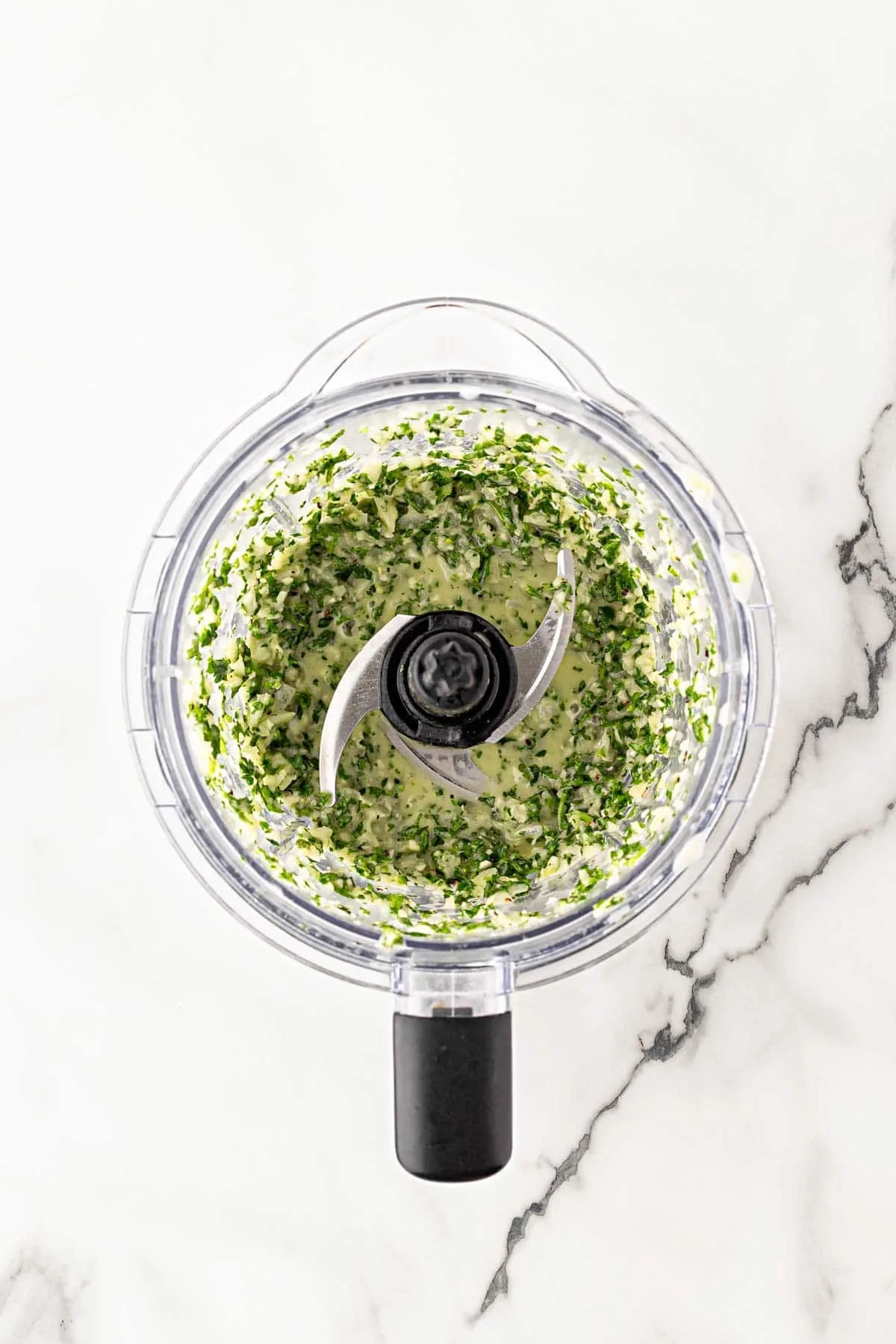
Table of Contents
How to Make Chimichurri Sauce
Making homemade Chimichurri Sauce is simple. The process involves combining fresh herbs, aromatics, oil, vinegar, and seasoning into a vibrant green condiment.
These step-by-step instructions explain how to prepare the sauce. For general information on handling food safely, consult the European Food Safety Authority.
1. Add All the Ingredients to a Food Processor
Place the fresh parsley, cilantro, diced onion, garlic cloves, lime juice, red wine vinegar, olive oil, salt, pepper, and optional red pepper flakes into a food processor or heavy-duty blender.
Make sure the parsley, cilantro, onion, garlic, and seasonings are evenly distributed before blending.
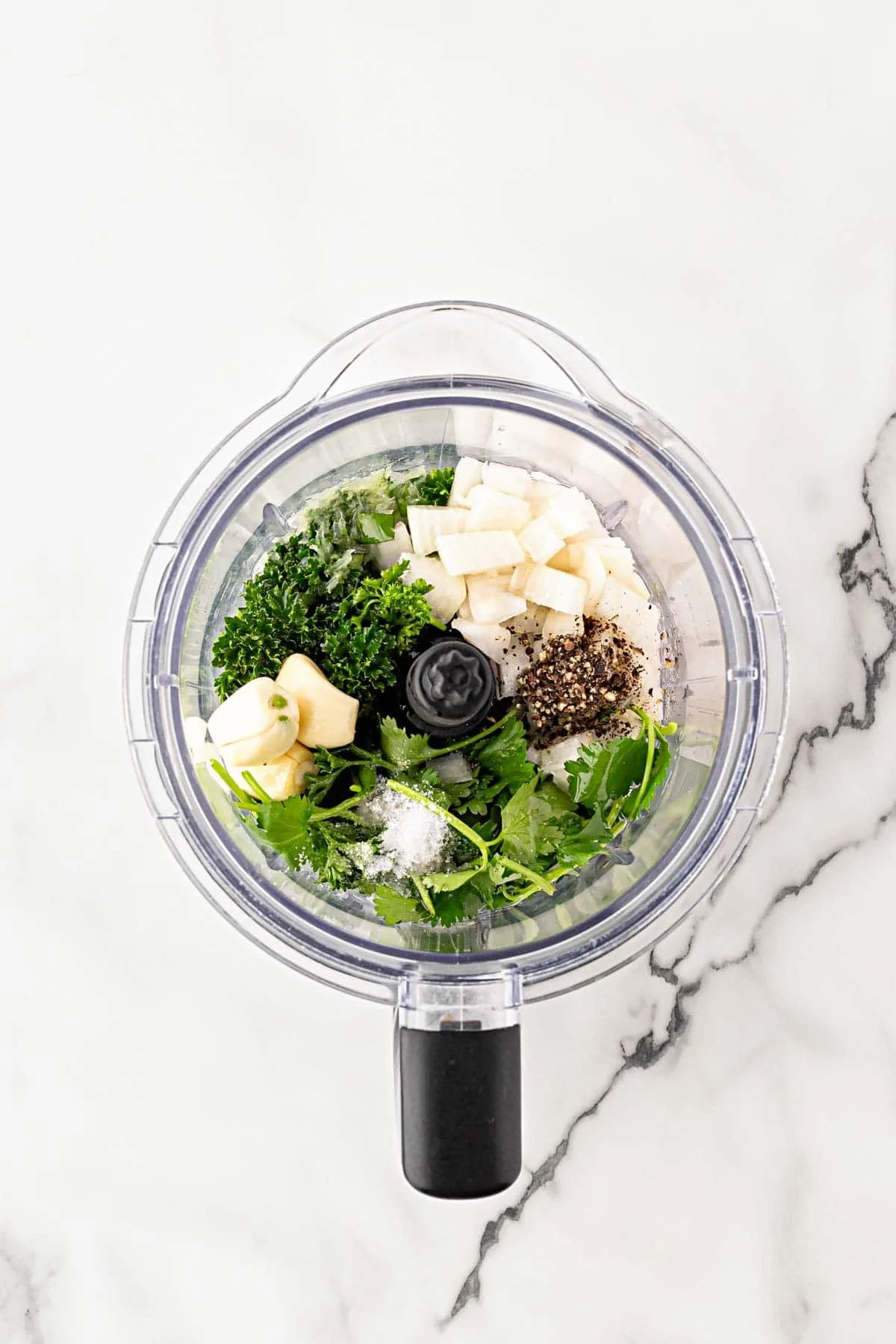
2. Blend Until Your Chimichurri Sauce Is Smooth
Pulse or blend the ingredients until everything is chopped and combined to your preferred texture.
Scrape down the sides as needed, then serve immediately or refrigerate until ready to use.
Pro Tip: A food processor makes this recipe especially quick, but you don’t need one to make great chimichurri. Finely chopping the herbs and aromatics by hand creates a more rustic texture.
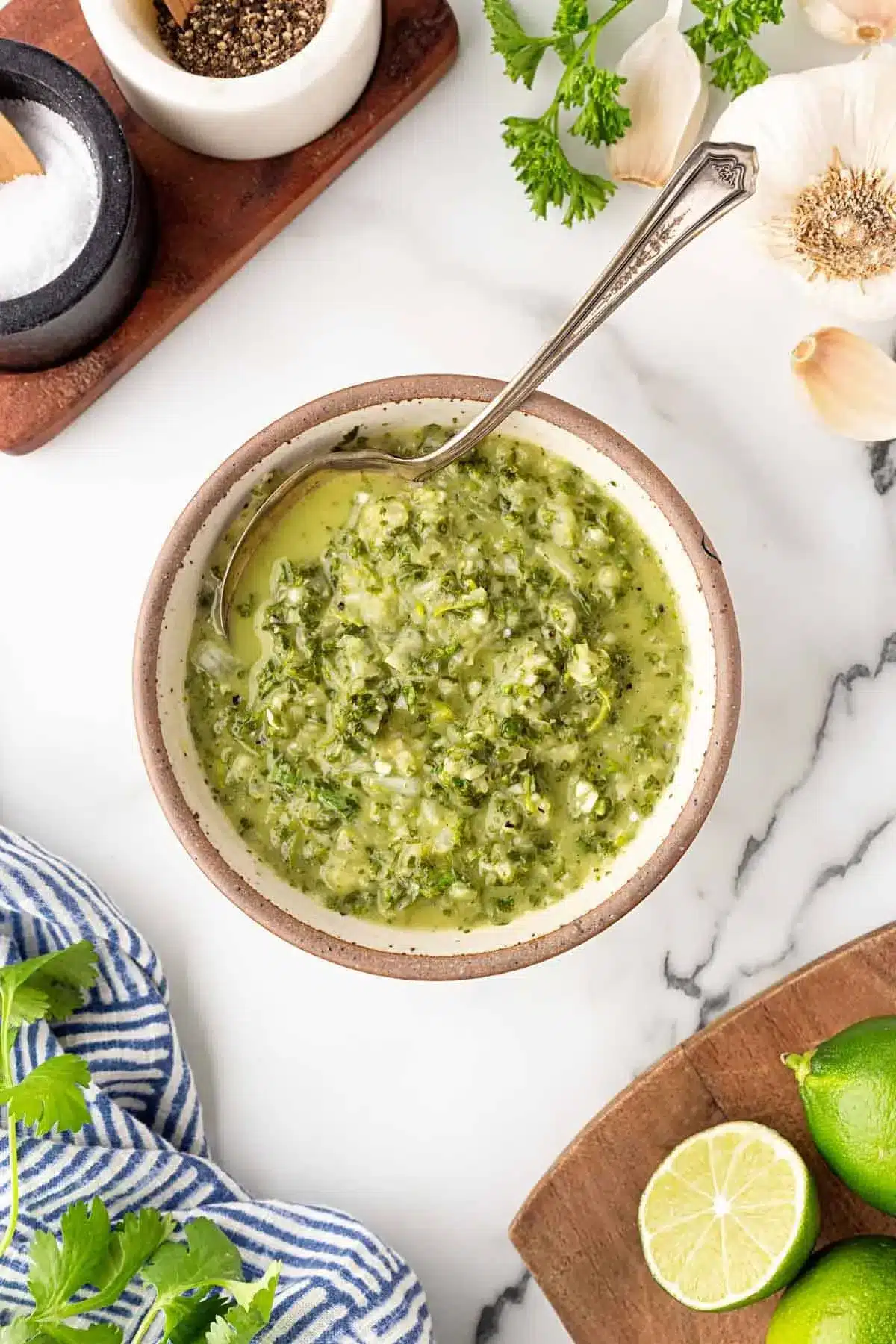
Although the original recipe calls for blending until smooth, short pulses help preserve visible pieces of herbs and prevent the sauce from becoming overly processed.
Homemade Chimichurri Sauce Recipe
This Chimichurri Sauce combines fresh parsley and cilantro with garlic, onion, olive oil, lime juice, and red wine vinegar for a bright, versatile sauce.
Chimichurri Sauce Ingredients
- 1 cup fresh parsley
- 1 cup fresh cilantro
- 1/4 to 1/3 cup olive oil
- 1/2 medium onion, diced
- 3 garlic cloves
- 3 tablespoons fresh lime juice
- 2 tablespoons red wine vinegar
- 1/2 teaspoon salt
- 1/2 teaspoon black pepper
- Optional: 1/4 teaspoon red pepper flakes
Chimichurri Sauce Instructions
- Wash the fresh parsley and cilantro thoroughly, then dry them well.
- Prepare the onion and garlic.
- Add all the ingredients to a heavy-duty blender or food processor.
- Blend until everything is chopped and combined to the desired consistency.
- Scrape down the sides as needed to distribute the ingredients evenly.
- Taste the sauce and adjust the seasonings as desired.
- Serve immediately, or let the sauce rest for 15 to 30 minutes so the flavors can develop.
Chimichurri Sauce Recipe Tips
Use Fresh Ingredients
Fresh parsley, cilantro, and lime juice make a noticeable difference in this recipe. Their bright flavors give homemade Chimichurri Sauce its characteristic freshness.
Dried herbs and bottled lime juice may produce a different flavor, so fresh ingredients are recommended whenever possible.
Start Small with Garlic and Salt
Garlic can become quite strong when blended into a sauce. Use the original recipe quantities as a starting point and taste before adding more.
The same applies to salt. You can always add more, but you cannot easily remove it once everything is mixed.
Let the Sauce Rest
Allow the finished sauce to rest for approximately 15 to 30 minutes before serving when time permits.
This allows the garlic, herbs, vinegar, and olive oil to combine into a more balanced flavor.
Avoid Overblending
A few quick pulses are usually enough to chop the ingredients and bring the sauce together.
Blending for too long can create a very fine texture and may affect the fresh green appearance.
Adjust the Consistency
The original recipe allows 1/4 to 1/3 cup of olive oil. Add oil within that range according to the consistency you prefer.
A thicker sauce works well as a spoonable topping, while a looser texture makes it easier to drizzle over cooked meat or vegetables.
Prepare the Sauce by Hand
You can make Chimichurri Sauce without a food processor. Finely chop the parsley, cilantro, onion, and garlic, then stir them together with the oil, vinegar, lime juice, and seasonings.
This approach creates a rustic sauce with more visible pieces of fresh herbs.
If you enjoyed this chimichurri sauce recipe, you might also like these other delicious condiments.
Chimichurri Sauce Variations
Chimichurri Sauce is easy to adapt to different tastes. These variations let you adjust the herbs, spice level, and texture while keeping the sauce’s fresh character.
Swap the Herbs
Replace some of the parsley with additional cilantro, or adjust the balance of the two herbs to suit your preferences.
The original recipe uses equal amounts of parsley and cilantro, but a parsley-forward or cilantro-forward version will have a different flavor.
Make It Spicier
For additional heat, use finely minced fresh red chili instead of the optional dried red pepper flakes.
A small amount of Fresno chili can provide a fresh pepper flavor. Start with a little and increase gradually, since fresh chili heat can vary.
Make a More Traditional Chimichurri
For a more traditional Argentine-inspired style, use parsley, garlic, oregano, red wine vinegar, olive oil, and chili flakes, with a coarser chopped texture.
The original recipe already includes red wine vinegar and does not contain smoked paprika, so there is no need to replace the vinegar or remove paprika from these ingredients.
Add Oregano
Add a little oregano for an herbal variation. Oregano brings another aromatic note that pairs well with parsley, garlic, and red wine vinegar.
What to Serve with Chimichurri Sauce
Chimichurri Sauce is a versatile condiment that complements grilled proteins, seafood, roasted vegetables, and savory side dishes.
Grilled Steak
Chimichurri is especially popular with grilled steak. Spoon it over skirt steak, flank steak, ribeye, cowboy steak, London broil, prime rib, or carne asada.
The acidity of the vinegar and lime juice adds brightness to richly flavored beef.
Chicken and Pork
Serve the sauce over grilled chicken, roasted chicken, pork chops, or grilled pork tenderloin.
The fresh herbs provide a flavorful contrast to simply seasoned meat.
Seafood
Drizzle Chimichurri Sauce over grilled shrimp, salmon, or cod.
It also works well with shrimp and grits or a simple shrimp pasta dish.
Roasted Vegetables
Add a spoonful to roasted potatoes, green beans, or other roasted vegetables just before serving.
The fresh herbs and vinegar brighten vegetables without requiring a heavy dressing.
Rice and Grain Bowls
Chimichurri Sauce can be drizzled over rice, grain bowls, and hearty salads for additional herb flavor.
Chimichurri Sauce Serving Ideas
Straight Off the Grill
This Chimichurri Sauce recipe is especially good with juicy grilled steaks, chicken, pork chops, and lamb chops.
Seafood Favorites
Serve it over shrimp, salmon, cod, shrimp and grits, or shrimp pasta.
Vegetables and Sides
Give roasted potatoes, green beans, rice, and shrimp salad a fresh flavor boost with a spoonful or two.
Sandwiches and Tacos
Spread the sauce on heirloom tomato sandwiches, birria tacos, chicken sandwiches, or wraps for a bright herbal finish.
How to Store Chimichurri Sauce
Fresh Chimichurri Sauce should be refrigerated promptly because it contains fresh herbs, garlic, onion, and oil.
Refrigerator Storage
The supplemental storage guidance recommends keeping Chimichurri Sauce in an airtight container in the refrigerator for up to 4 days.
The original article lists up to 1 week, but the shorter period is the more conservative recommendation. Keep it refrigerated at 40°F (4°C) or colder.
Olive oil may separate from the other ingredients while the sauce sits. Stir the chimichurri well before serving.
Freezing Chimichurri Sauce
For longer storage, spoon the sauce into an airtight freezer-safe container or portion it into ice cube trays.
The original article recommends freezing for up to 2 months, while the supplemental recipe mentions 3 months. For this recipe, use the original 2-month recommendation for best quality.
Once frozen, transfer the cubes to a sealed freezer-safe bag or container to protect them from freezer odors and excess air exposure.
How to Thaw Chimichurri Sauce
Thaw the frozen sauce overnight in the refrigerator. Stir thoroughly before serving, as the olive oil and liquids may separate during freezing and thawing.
Avoid leaving garlic-and-herb oil mixtures at room temperature for extended periods.
Chimichurri Sauce Recipe Help
Can Chimichurri Sauce Be Used as a Marinade?
Yes. Chimichurri Sauce works well as a marinade for beef, chicken, pork, and lamb.
The original recipe suggests marinating these meats for 2 to 8 hours and shrimp for approximately 15 to 30 minutes. Always marinate in the refrigerator.
If you want extra sauce for serving, set aside a clean portion before adding raw meat. Do not reuse marinade that has contacted raw meat as a finishing sauce unless it has been properly boiled.
Why Is My Chimichurri Sauce Bitter?
Bitterness can develop when delicate herbs are overprocessed or when the sauce contains particularly strong or bitter-tasting ingredients.
The original recipe notes that blending the herbs too long may affect the flavor. Use short pulses rather than blending continuously.
Can I Make Chimichurri Without a Food Processor?
Yes. Finely chop the fresh herbs, onion, and garlic by hand, then combine them with the olive oil, vinegar, lime juice, and seasonings.
More Condiment and Sauce Recipes
If you enjoy homemade sauces and condiments, these are other options to explore for everyday cooking and family meals.
- Chow Chow Relish
- Pepper Jelly
- Salsa Verde
- Tartar Sauce
- White Gravy
- Au Jus
- Chicken Gravy
- Chipotle BBQ Sauce
- How to Make a Roux
Frequently Asked Questions
What Is Chimichurri Sauce Made Of?
This Chimichurri Sauce recipe is made with fresh parsley, cilantro, olive oil, onion, garlic, lime juice, red wine vinegar, salt, pepper, and optional red pepper flakes.
How Long Does Homemade Chimichurri Sauce Last?
For this recipe, use the conservative supplemental recommendation of up to 4 days in a sealed container in the refrigerator. Stir before serving if the oil separates.
Can You Freeze Chimichurri Sauce?
Yes. Freeze it in an airtight container or ice cube trays for up to 2 months for best quality, following the original recipe’s recommendation. Thaw in the refrigerator before using.
Can I Use Cilantro Instead of Parsley?
Yes. You can increase the amount of cilantro or adjust the parsley-to-cilantro balance according to your taste. The flavor will be different from the original recipe.
How Do I Make Chimichurri Sauce Spicier?
Add more red pepper flakes or use a small amount of finely chopped fresh red chili. Increase gradually and taste as you go.
Should Chimichurri Sauce Be Smooth or Chunky?
The original recipe uses a food processor or blender for a relatively smooth sauce. A coarsely chopped texture is also common and works well when the ingredients are prepared by hand.
Can Chimichurri Sauce Be Made Ahead of Time?
Yes. Prepare the sauce ahead, keep it refrigerated in an airtight container, and stir before serving. Its flavor can develop after a short resting period.
What Meat Goes Best with Chimichurri Sauce?
Grilled skirt steak and flank steak are classic choices. The sauce also pairs well with ribeye, chicken, pork chops, and lamb.
Can Chimichurri Sauce Be Used on Vegetables?
Yes. Drizzle it over roasted potatoes, green beans, and other vegetables to add a fresh herb and garlic flavor.
Why Does Chimichurri Sauce Separate in the Refrigerator?
Olive oil and the acidic liquids in the dressing naturally separate over time. Stir or gently mix the sauce before serving.