
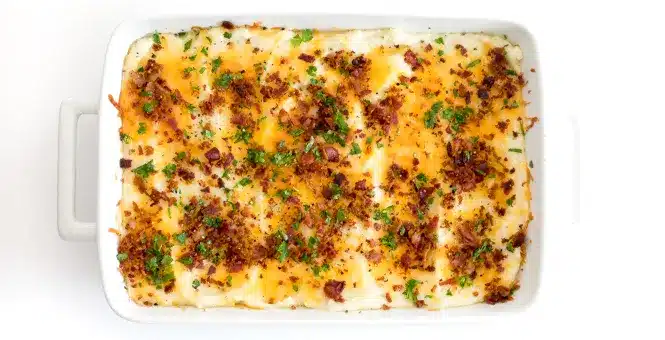
These Loaded Mashed Potatoes bring all the delicious flavors of a loaded baked potato into one creamy, cheesy casserole. Fluffy russet potatoes are mashed with butter, sour cream, and milk, then topped with melted cheddar cheese, crispy bacon, and fresh parsley for a comforting side dish that’s perfect for family dinners and holiday gatherings.
This loaded mashed potato casserole is easy to prepare, simple to customize, and convenient when you’re feeding a crowd. Whether you’re planning Thanksgiving dinner, a Sunday roast, or a casual weeknight meal, it’s a delicious way to make ordinary mashed potatoes feel special.
If you’re putting together a holiday menu, explore our Traditional Thanksgiving Side Dishes for other comforting recipes to serve alongside these creamy potatoes.
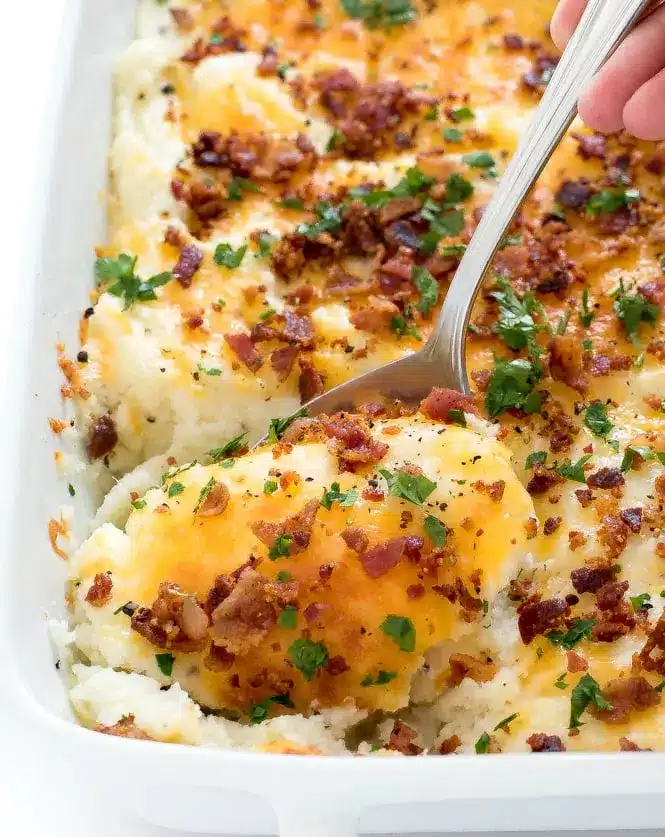
Table of Contents
What Are Loaded Mashed Potatoes?
Loaded mashed potatoes are a variation of classic mashed potatoes inspired by the toppings commonly served on a loaded baked potato. Instead of splitting open individual baked potatoes, the creamy mashed potato mixture is spread into a casserole dish and finished with toppings such as cheddar cheese, bacon, sour cream, and fresh herbs.
This version starts with peeled russet potatoes cooked until fork-tender. They are mashed with softened butter, sour cream, and milk until smooth and fluffy. The potatoes are then transferred to a baking dish and covered with shredded cheddar cheese.
A short baking time melts the cheese and creates a warm, comforting casserole. Crispy crumbled bacon and chopped fresh parsley are added after baking, providing a contrast of textures and flavors.
The result is similar to enjoying a loaded baked potato, but in a form that’s easier to serve to several people. Instead of preparing individual portions, everyone can scoop the amount they want from the same casserole dish.
It’s a particularly useful option for Thanksgiving, Christmas dinner, family celebrations, and meals that call for a generous potato side dish.
Why You’ll Love This Loaded Mashed Potato Recipe
- Extra-creamy texture: Russet potatoes, butter, sour cream, and milk create a smooth mashed potato base.
- Classic loaded potato toppings: Cheddar cheese, crispy bacon, and fresh parsley make every serving flavorful.
- Perfect for gatherings: A casserole dish makes it convenient to prepare and serve potatoes for a group.
- Simple ingredients: The recipe uses familiar ingredients commonly found in a home kitchen.
- Make-ahead friendly: The casserole can be assembled before the meal and baked when needed.
- Easy to customize: The original recipe allows additional herbs, vegetables, and other baked potato toppings.
- Versatile side dish: Serve it alongside roasted chicken, meatloaf, steak, or a holiday main course.
These loaded mashed potatoes are also a good choice when you want to prepare a comforting dinner without managing too many last-minute steps. The potatoes can be prepared ahead, while the final cheese topping takes only a short time in the oven.
For another potato-based side with a completely different flavor and texture, consider our Vinegar-Based French Potato Salad with Cornichons, which uses a tangy dressing rather than a creamy baked topping.
Ingredients for Loaded Mashed Potato Casserole
The original article identifies the main ingredients, while the complete measured quantities are contained in the Tasty Recipes card below. Here’s what each ingredient contributes to the casserole.
Russet Potatoes
Russet potatoes are the preferred choice for this recipe because of their fluffy texture when cooked and mashed. Their starchy interior works particularly well with butter, milk, and sour cream.
The original preparation calls for peeling the potatoes and cutting them into chunks before boiling. Keeping the pieces reasonably similar in size helps them cook evenly.
Bay Leaf
A bay leaf is added to the cooking water with the potatoes. It provides a subtle aromatic element during boiling.
Remove and discard the bay leaf after draining the potatoes. It is not intended to remain in the finished casserole.
Butter
Softened butter gives the mashed potatoes richness and helps create a smooth consistency. The original recipe uses unsalted butter so the seasoning can be controlled separately.
Salted butter may be used as an alternative, but the original ingredient notes recommend reducing the additional salt accordingly.
Sour Cream
Sour cream contributes creaminess along with a mild tangy flavor. It complements the rich potatoes and cheddar cheese without needing a complicated sauce.
The original recipe also suggests using additional sour cream as an optional topping, just as you might with a traditional loaded baked potato.
Milk
Milk helps loosen the potato mixture and creates a smooth, fluffy consistency. Add it according to the measured recipe instructions so the casserole doesn’t become overly thin.
The finished potatoes should be creamy enough to spread in the baking dish while still holding their shape when served.
Shredded Cheddar Cheese
Cheddar cheese creates the melted upper layer of the casserole. The original recipe uses shredded cheddar, which adds a savory, slightly sharp flavor.
The cheese is added before the casserole goes into the oven, allowing it to melt over the creamy potato base.
Crispy Bacon
Cooked, crumbled bacon contributes the familiar salty and smoky flavor associated with loaded baked potatoes.
The bacon should be cooked before it is added to the casserole. In this recipe, it is sprinkled over the potatoes after baking, helping preserve its crisp texture.
Fresh Parsley
Chopped parsley adds fresh color and a mild herbal note to the rich casserole.
Additional toppings mentioned in the original article include chopped green onions, chives, pickled red onions, diced jalapeños, and extra sour cream.
What Are the Best Potatoes for Loaded Mashed Potatoes?
Russet potatoes are especially well suited to this loaded mashed potato casserole because they have a relatively starchy texture and become fluffy when mashed.
The original recipe strongly recommends russets rather than waxy varieties for the lightest mashed potato base. Waxy potatoes often produce a denser texture, particularly when mashed extensively.
Peeling the russets helps produce a smooth finished casserole without noticeable pieces of skin. However, the original tips also mention leaving the skins on after scrubbing the potatoes thoroughly if you prefer a more rustic result.
Whichever approach you choose, avoid overworking the cooked potatoes. Too much mashing or mixing can release excess starch and make them gluey instead of fluffy.
How to Make Loaded Mashed Potatoes
The preparation has four main stages: boiling the potatoes, making the creamy mashed potato base, adding the cheese, and baking before finishing with bacon and parsley. Follow the complete Tasty Recipes card for the original ingredient amounts and oven settings.
Step 1: Boil the Potatoes
Peel the russet potatoes and cut them into large chunks. Transfer them to a large pot with the bay leaf, then cover with cold water.
Season the water with salt and bring it to a boil. Cook the potatoes for approximately 15–20 minutes, or until they are fork-tender.
Once cooked, drain the potatoes and return them to the pot. Remove and discard the bay leaf before mashing.
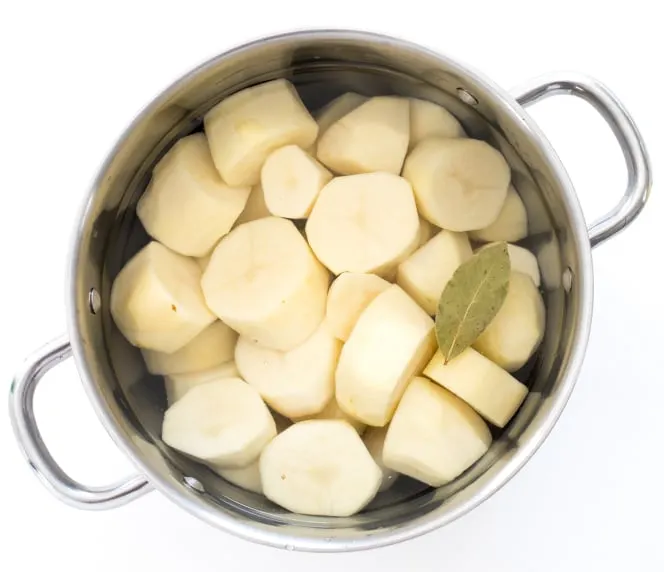
Starting the potatoes in cold water helps them heat more evenly. Check several pieces with a fork before draining to make sure they are tender throughout.
Step 2: Make the Creamy Mashed Potato Base
Add the softened butter to the drained potatoes and mash until smooth.
Next, add the sour cream and milk. Continue mashing gently until the potatoes are creamy and fluffy.
Season with salt and freshly cracked black pepper to taste, following the original recipe’s directions.
Transfer the mashed potatoes to the prepared casserole dish and spread them into an even layer.
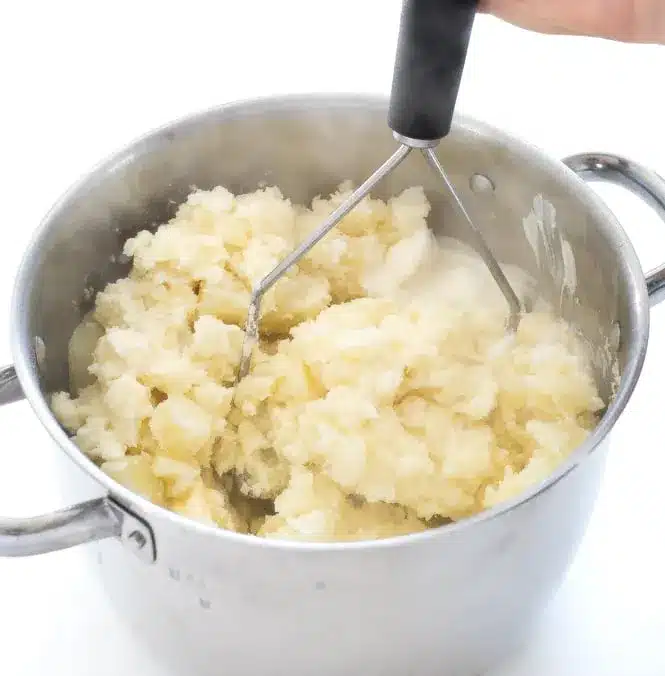
Texture tip: Mash until the potatoes are smooth, but stop before they become sticky or elastic. Gentle mixing helps retain the fluffy texture.
Step 3: Add the Shredded Cheddar Cheese
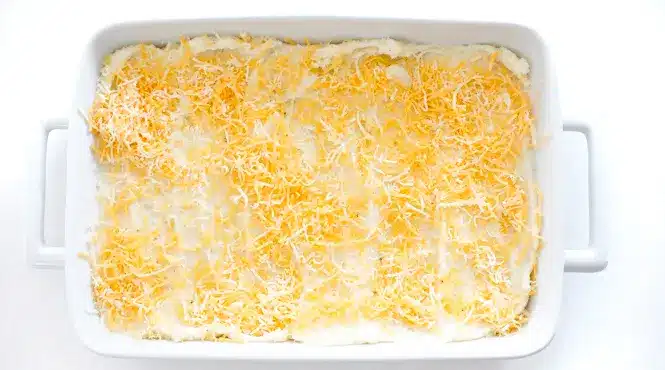
Sprinkle the shredded cheddar cheese evenly over the surface of the mashed potatoes.
The cheese forms the casserole’s warm, melted topping. Reserve the cooked bacon and fresh parsley until after baking, as directed in the original method.
Spreading the cheese across the entire surface helps each scoop include a little of the melted topping.
Step 4: Bake and Finish with Bacon
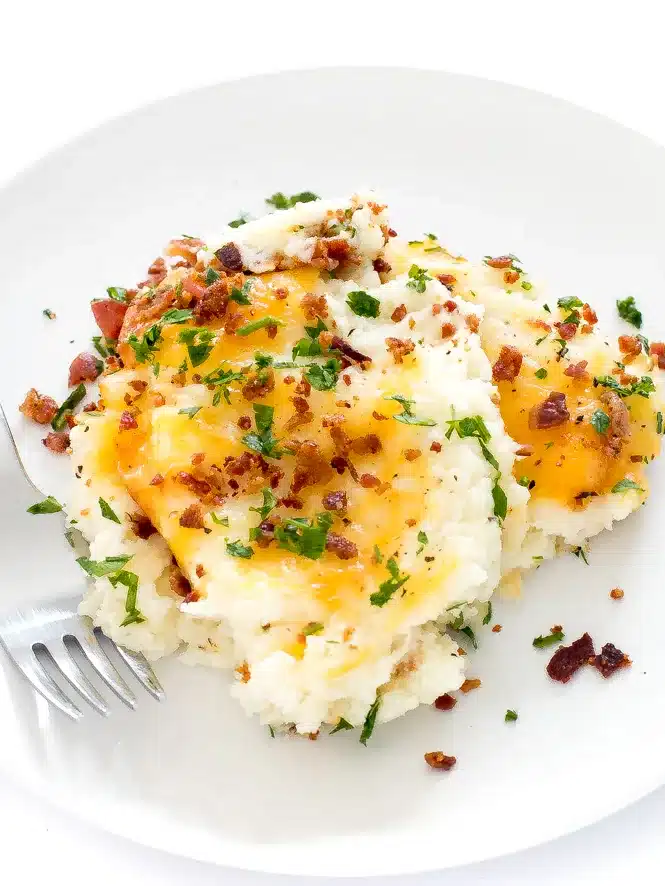
Bake the casserole for approximately 10 minutes, or until the cheese has melted and begins to brown.
The original article notes that the broiler may be used briefly if the cheese doesn’t brown sufficiently. Watch closely, since cheese can darken quickly under high heat.
Remove the casserole from the oven and sprinkle with cooked, crumbled bacon and freshly chopped parsley.
Serve warm, with extra toppings available separately if desired.
Tips for the Best Loaded Mashed Potatoes
Don’t Overmix the Potatoes
Overworking mashed potatoes can make them dense or gluey. Use a potato masher and work just until the mixture reaches the desired consistency.
Avoid excessive mixing after the milk and sour cream have been added.
Peel the Potatoes for a Smooth Texture
The original recipe recommends peeling russets for the smoothest finished casserole. Leaving the skins on is an option for a rustic texture, but it changes the appearance of the finished mashed potatoes.
Cook the Bacon Before Adding It
Use fully cooked, crumbled bacon. Adding it after the cheese has melted helps retain its crunchy texture instead of letting it soften during baking.
Spread the Cheese Evenly
A consistent layer of shredded cheddar allows the cheese to melt across the casserole rather than collecting in a few spots.
Watch the Broiler Carefully
If you use the broiler for extra color, remain close to the oven. The cheese needs only a short amount of direct heat before it can begin to burn.
Add Fresh Toppings Before Serving
Parsley, chives, or green onions are best added near serving time to preserve their fresh flavor and color.
Loaded Mashed Potatoes Variations and Substitutions
One of the advantages of this casserole is how easily it can be customized using familiar baked potato toppings.
Green Onions or Chives
Add chopped green onions or fresh chives for a mild onion flavor. They provide color and balance the richness of the melted cheese and bacon.
Spicy Loaded Mashed Potatoes
Diced jalapeños are suggested in the original article for anyone who prefers a spicy topping. They can be served separately so guests can adjust their own portions.
Loaded Mashed Potatoes with Cauliflower
The source suggests replacing half of the potatoes with cooked cauliflower for a different vegetable-based version.
The cauliflower should be cooked until fork-tender before being incorporated into the mashed potato mixture. This variation changes the flavor and consistency of the original casserole.
For another vegetable side, serve our Broccoli Cauliflower Salad separately to add a fresh, crunchy contrast to the meal.
Barbecue Chicken or Pulled Pork
The original ingredient notes suggest adding shredded barbecue chicken or slow cooker pulled pork, along with a drizzle of barbecue sauce, for a more substantial variation.
If using cooked meat as a topping, handle and reheat it safely. Additional toppings will also make the casserole heavier and more filling than the standard side-dish version.
Additional Herbs and Toppings
The source also suggests thyme, pickled red onions, black olives, beans, and extra sour cream.
Choose toppings that complement the rest of your meal, and keep stronger flavors in separate bowls when serving guests with different preferences.
How to Make Loaded Mashed Potatoes Ahead of Time
Loaded mashed potato casserole is a useful make-ahead side dish because the potatoes can be prepared before the final baking step.
The original recipe specifically recommends assembling the casserole in advance and baking it when you’re ready to eat.
To plan ahead, prepare and mash the potatoes according to the recipe, spread them into the baking dish, and add the shredded cheese.
Cover and refrigerate the assembled casserole promptly until you’re ready to finish cooking. Keep the cooked bacon and fresh parsley separate so they can be added afterward.
A chilled casserole may require more warming time than freshly prepared hot mashed potatoes. The original 10-minute baking direction is for the recipe as written, so don’t assume it will be sufficient for a fully refrigerated dish.
For a holiday meal, it can help to prepare other sides using different cooking methods. Our Baked Beans offer another comforting option for a family-style dinner.
How to Store and Reheat Loaded Mashed Potatoes
Refrigerating Leftovers
Transfer leftovers to shallow, airtight containers and refrigerate promptly. Properly refrigerated cooked leftovers are generally best used within three to four days, according to standard USDA guidance.
Because this casserole contains dairy products and cooked bacon, it should not remain at room temperature for extended periods.
Reheating the Casserole
Reheat leftovers until thoroughly hot, checking that the center reaches 165°F.
If the mashed potatoes have firmed up in the refrigerator, gentle reheating can help restore a softer consistency. Avoid overheating the cheese topping or repeatedly reheating the same portion.
Can You Freeze Loaded Mashed Potatoes?
Mashed potato dishes containing butter and dairy may be frozen, although the texture can change after thawing. The original source doesn’t provide a tested freezing duration for this casserole.
For the best texture, consider preparing only the amount you’ll need, especially if the casserole is intended for a special occasion.
For official guidance on refrigerating and reheating cooked foods, consult the USDA Leftovers and Food Safety guide.
What to Serve with Loaded Mashed Potatoes
This cheesy mashed potato casserole is rich and comforting, so it works particularly well with roasted meats, chicken, and simple vegetables. You can also serve it as part of a holiday meal with several smaller sides.
Roasted Chicken
Roasted chicken is a natural pairing with mashed potatoes. The savory chicken juices complement the buttery potato base, while the cheddar and bacon make the side extra satisfying.
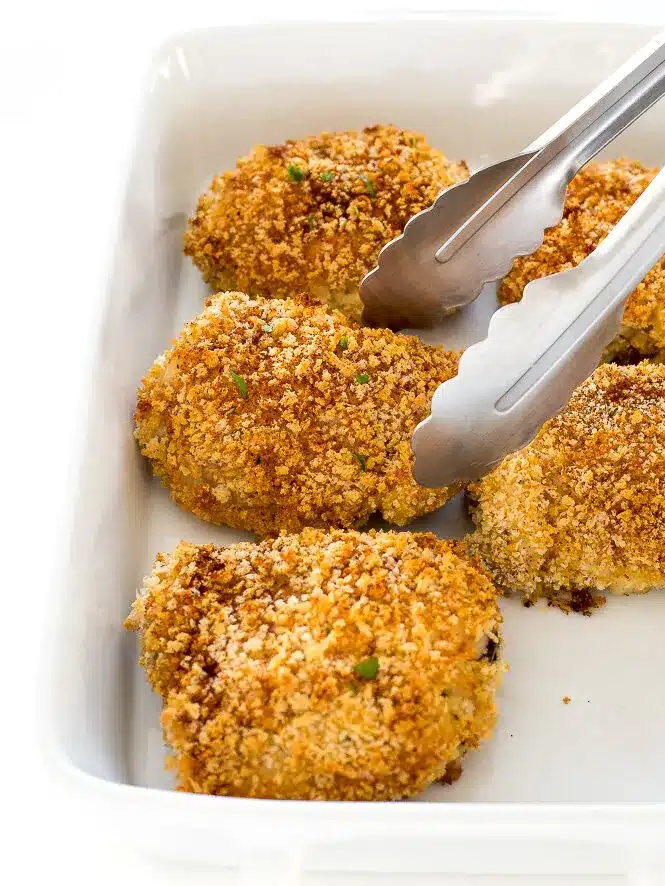
For a restaurant-inspired chicken dinner, try our LongHorn Steakhouse Parmesan Crusted Chicken. Since both dishes are rich, a fresh vegetable salad is a good addition to the plate.
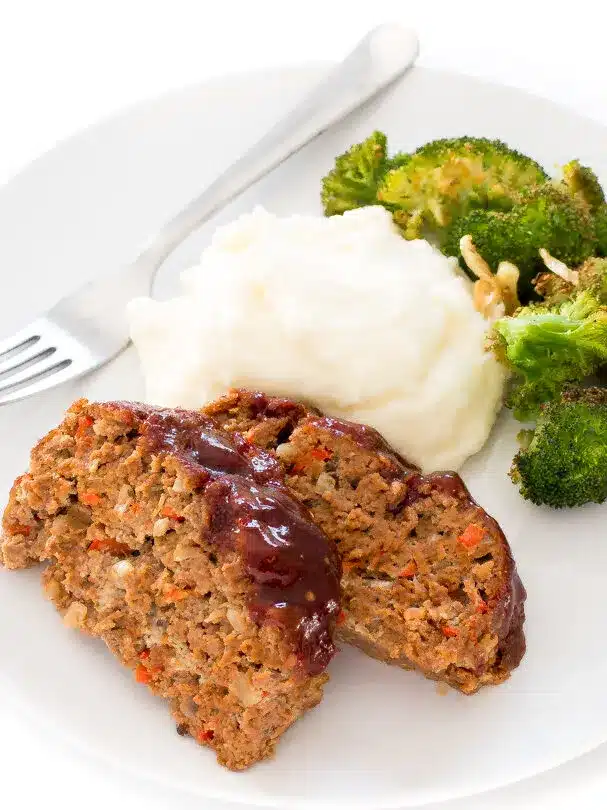
Meatloaf
Meatloaf and mashed potatoes are a classic comfort-food combination. The cheesy casserole adds even more richness to the familiar pairing.
For an individual-portion alternative to traditional meatloaf, our Turkey Meatloaf Muffins make an easy dinner option with this potato side.
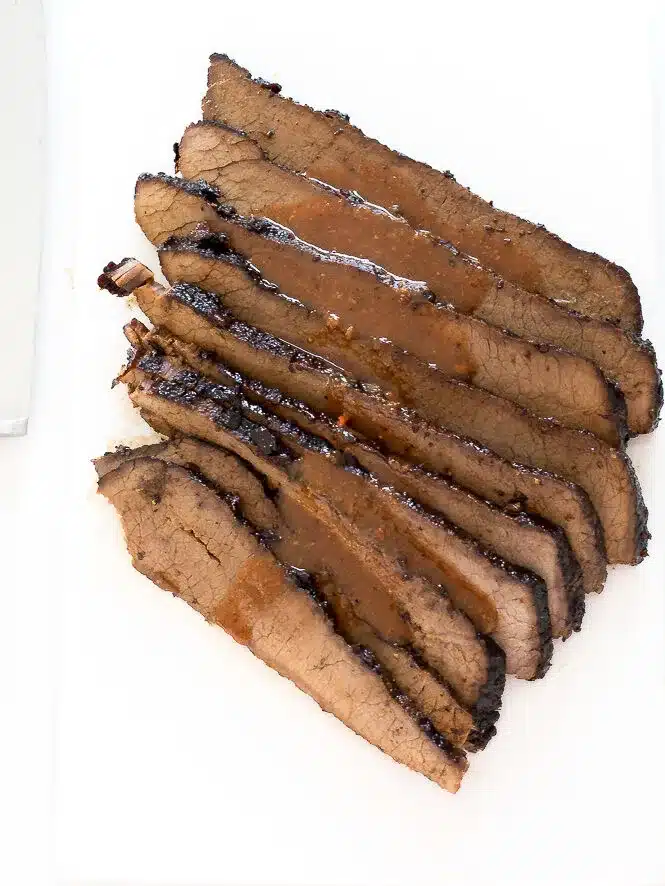
Roasted Beef or Brisket
Slow-roasted beef and brisket also pair well with a creamy potato side. Their savory flavor complements the butter and cheddar, while bacon brings another smoky note.
Serve a green vegetable or fresh salad alongside the beef and potatoes to provide a lighter contrast.
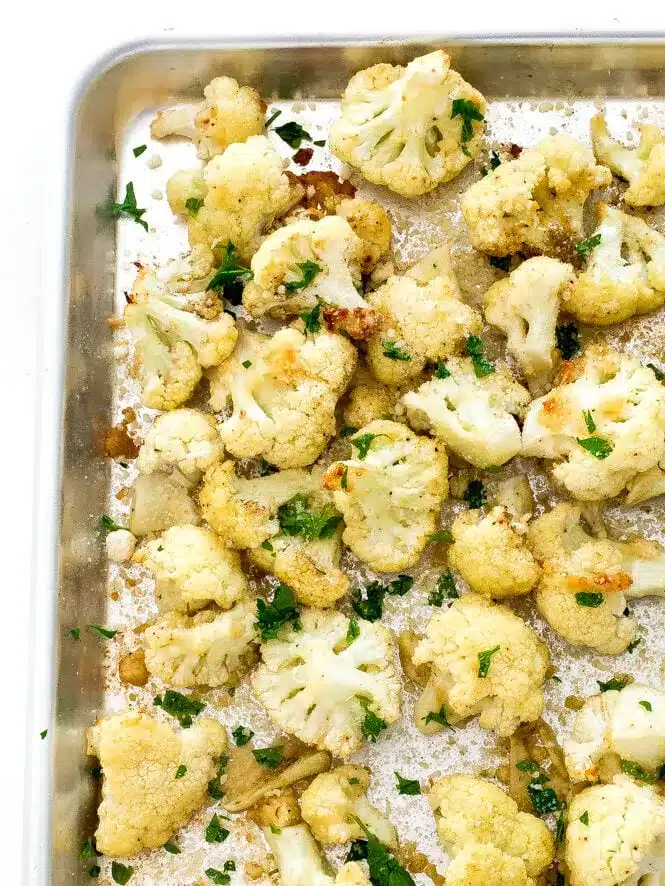
Roasted Vegetables
Roasted cauliflower, green beans, broccoli, and other vegetables add variety to a meal with loaded mashed potatoes.
For something fresh and crunchy rather than roasted, consider our Cucumber Sweet Pepper Salad. Its crisp vegetables provide contrast to the warm, cheesy casserole.
Southern-Inspired Dinners
For a Southern-style meal, serve loaded mashed potatoes with chicken, beef, or vegetables and a familiar bread side.
Our Garlic Cheese Stuffed Rolls are an option for a larger gathering, although you may prefer fresh vegetables when the rest of the menu is already rich.
For a different Southern main dish, pair the casserole with Chicken Fried Steak and a simple vegetable side.
Frequently Asked Questions About Loaded Mashed Potatoes
Can I Make Loaded Mashed Potatoes Ahead of Time?
Yes. The original recipe recommends assembling the casserole in advance and baking it when you’re ready to serve. Keep it refrigerated until baking, and remember that a chilled casserole may require more heating time than freshly prepared potatoes.
What Are the Best Potatoes for Loaded Mashed Potatoes?
Russet potatoes are the preferred choice in this recipe because they produce a fluffy mashed potato texture. Peel and cube them before boiling, and avoid excessive mashing once they’re tender.
How Do You Keep Mashed Potatoes from Getting Gluey?
Avoid overmixing the cooked potatoes. Mash them gently with butter, sour cream, and milk, and stop once the mixture reaches a smooth consistency. Overworking starchy potatoes can result in a sticky texture.
Can I Use Leftover Mashed Potatoes?
Previously cooked mashed potatoes can be used as the base for a similar casserole, provided they were stored safely. However, their consistency may differ from freshly prepared potatoes, and additional warming time may be required. The original recipe is written for freshly boiled russet potatoes.
What Toppings Go on Loaded Mashed Potatoes?
This recipe uses melted cheddar cheese, crispy bacon, and chopped fresh parsley. Other toppings mentioned in the source include sour cream, green onions, chives, pickled red onions, and diced jalapeños.
How Long Do Loaded Mashed Potatoes Last in the Refrigerator?
Properly refrigerated cooked leftovers are generally best used within three to four days. Store the casserole promptly in airtight containers and reheat leftovers to 165°F before serving.
With creamy russet potatoes, melted cheddar, smoky bacon, and fresh parsley, these Loaded Mashed Potatoes make an irresistible comfort-food side dish for holidays and everyday dinners. Follow the original recipe card for the exact measurements, and enjoy this easy casserole with your favorite main course.
Loaded Mashed Potatoes
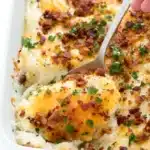
This Loaded Mashed Potato Casserole recipe features everything you love in a classic baked potato, but in a much more convenient form (hence the casserole dish). Trust me when I say this is a guaranteed hit at the family table!
- Prep Time: 15 mins
- Cook Time: 30 mins
- Total Time: 45 mins
- Yield: 6 1x
- Category: Side Dish
- Cuisine: American
Ingredients
- 2 1/2 pounds russet potatoes, peeled and cubed
- 1 bay leaf
- 6 tbsp unsalted butter, softened
- 1/4 cup sour cream
- 3/4 cup milk
- salt and pepper
- 6 slices bacon, cooked and crumbled
- 1 cup shredded cheddar cheese
Instructions
- Preheat oven to 375 degrees. Grease a 9 x 13 pan with nonstick cooking spray.Meanwhile peel and cut potatoes into large chunks. Add the potatoes to a large pot along with the bay leaf and fill will cold water. Sprinkle with salt and bring to a boil. Cook for 15-20 minutes or until the potatoes are fork tender. Drain potatoes and transfer them back to the pot. Discard bay leaf.
- Add the softened butter and mash the potatoes until smooth and lump free. Add in the sour cream and milk and continue mashing until the potatoes are smooth and fluffy. Season with salt and pepper to taste.
- Layer potatoes into the bottom of the prepared pan.
- Top with shredded cheddar cheese.
- Bake for 10 minutes or until the cheese is melted and starts to brown. If you cheese does not brown you can also turn on the broiler for a minute or so.Top with crumbled bacon and fresh chopped parsley and serve!
Nutrition
- Calories: 454 kcal
- Sugar: 3 g
- Sodium: 294 mg
- Fat: 29 g
- Saturated Fat: 16 g
- Carbohydrates: 36 g
- Fiber: 2 g
- Protein: 13 g
- Cholesterol: 72 mg
Keywords: Baked Potatoes, Loaded Mashed Potatoes, Russet Potatoes