
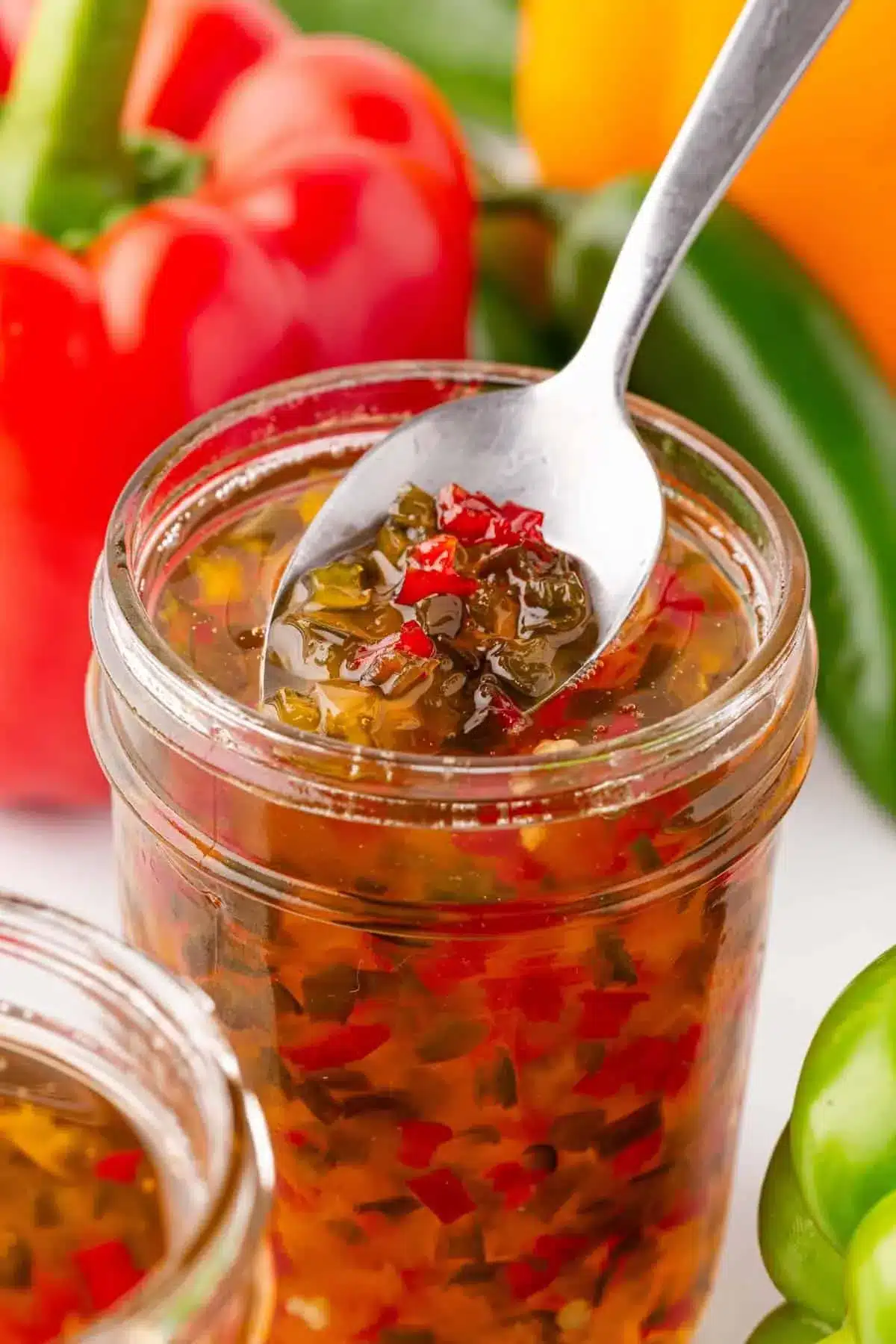
This homemade Pepper Jelly Recipe brings together sweet bell peppers, spicy jalapeños, and the irresistible sweet-and-hot flavor that makes Southern pepper jelly such a versatile condiment. Serve it over cream cheese with crackers, add a spoonful to a sandwich, or use it as a finishing glaze for savory dishes.
If you’ve ever wondered how to make pepper jelly, what gives it the right consistency, or how to store it safely, this guide covers the essentials. You’ll also find serving suggestions, troubleshooting tips, and ideas for incorporating sweet and spicy pepper jelly into appetizers and family meals.
Table of Contents
What Is Pepper Jelly?
Pepper jelly is a sweet, tangy, and sometimes spicy spread made with peppers and ingredients that create a jelly-like consistency. It is especially popular in Southern-inspired cooking, where it’s frequently served with cream cheese and crackers as a simple appetizer.
Unlike traditional fruit jellies, pepper jelly gets its distinctive flavor from vegetables such as bell peppers and hot peppers such as jalapeños. The sweet flavor balances the pepper heat, creating a condiment that works with both savory and mildly sweet foods.
The original photograph for this recipe identifies bell peppers and jalapeños. Bell peppers contribute a mild sweetness and colorful appearance, while jalapeños provide the warm pepper flavor that makes homemade pepper jelly memorable.
Depending on the particular recipe, the finished jelly may be transparent or slightly textured, with tiny pieces of peppers suspended throughout. Its consistency should be spreadable enough to spoon over cheese but thick enough to stay on a cracker.
Because pepper jelly is a condiment rather than a complete meal, it’s also a convenient addition to appetizer boards. It pairs beautifully with other savory bites, such as our Classic Deviled Eggs Recipe, when you’re arranging a platter for a party.
Why You’ll Love Homemade Pepper Jelly
Pepper jelly has a flavor profile that’s quite different from an ordinary jam. Its sweet heat can bring out the savory character of cheese, chicken, and other foods without requiring a complicated sauce.
- Sweet and spicy flavor: The contrast between sweet peppers and jalapeño heat creates a distinctive condiment.
- Great for appetizers: Pepper jelly and cream cheese make an easy party-ready pairing.
- Versatile: Use it with sandwiches, grilled foods, cheese boards, or crackers.
- Colorful presentation: Red or green peppers can give the finished jelly an attractive appearance.
- Useful in small amounts: Even a spoonful can provide a noticeable sweet-and-savory contrast.
- Perfect for entertaining: Prepare a simple cheese platter and place the pepper jelly in a serving bowl.
It also works well when you’re serving several appetizers together. Alongside a dish like our Rotel Dip Recipe, pepper jelly provides a different flavor and texture, giving guests both creamy, savory and sweet-spicy options.
Pepper Jelly Ingredients Explained
The original source article was replaced by a security verification message and did not include its ingredient list or quantities. The following explains ingredients commonly used in pepper jelly; it does not replace the measured ingredients in the original Tasty Recipes card.
Bell Peppers
Bell peppers provide a mild flavor and an appealing natural color. Red bell peppers tend to have a sweeter taste, while green bell peppers contribute a more grassy or vegetal pepper note.
Finely chopping the peppers can help distribute their flavor evenly. However, the exact amount of peppers should always follow the recipe, particularly when the jelly will be canned.
Jalapeño Peppers
Jalapeños add the heat that distinguishes spicy pepper jelly from a mild preserve. Their intensity can vary, so one batch of peppers may taste noticeably hotter than another.
A pepper’s pale inner membranes contain much of its capsaicin. Handle hot peppers carefully, and wash your hands and cutting equipment after preparation.
Sugar
Sugar contributes sweetness and, in many conventional jelly recipes, is also involved in the gelling process. Reducing sugar without adjusting the entire tested formula can prevent the jelly from setting correctly.
If you prefer a lower-sugar version, select a formula specifically developed for that purpose instead of reducing sugar in a standard pepper jelly recipe.
Vinegar
Many pepper jelly recipes use vinegar for its tangy flavor and acidity. Acidity is particularly important when a recipe is designed for shelf-stable canning because peppers themselves are low-acid vegetables.
Never reduce or change the type of vinegar in a tested canning recipe unless its directions specifically allow the change.
Pectin
Pectin helps create the texture associated with jelly. Some recipes use liquid pectin; others call for powdered pectin or a product developed for reduced-sugar preserves.
These products are not always interchangeable. Follow the exact type and preparation method required by the original recipe.
What Are the Best Peppers for Homemade Pepper Jelly?
The best choice depends on how much heat you enjoy and the type of recipe you’re preparing. For the classic sweet-and-spicy balance shown in the original image, bell peppers and jalapeños make a natural combination.
Red bell peppers contribute sweetness and bright color. Green bell peppers have a slightly different pepper flavor, while jalapeños provide a familiar level of heat.
You may also encounter recipes using other hot peppers, but their intensity and flavor can differ considerably. In recipes intended for home canning, don’t replace pepper varieties or change pepper quantities unless a tested recipe specifically permits it.
Fresh peppers are the best starting point for a pleasant flavor. Choose peppers without signs of spoilage, wash them well, and prepare them according to your recipe instructions.
How to Make Pepper Jelly
Making homemade pepper jelly typically involves preparing the peppers, combining them with a sweetened and acidic jelly mixture, heating the ingredients according to the formula, and allowing the jelly to set.
However, the exact ingredient amounts, timing, order of mixing, type of pectin, and storage procedure vary significantly between recipes. Because these details were not present in the source article, the explanation below is an overview rather than a replacement for the original recipe card.
Prepare the Peppers
Peppers are generally washed, trimmed, and chopped. Finely diced pieces can distribute more evenly throughout the finished condiment and produce an attractive texture.
When working with jalapeños, avoid touching your face or eyes during preparation. A food processor may make chopping easier, but be careful not to overprocess the peppers if your chosen recipe calls for visible pieces.
Combine the Jelly Ingredients
Traditional pepper jelly recipes commonly rely on a balance of peppers, sweetener, acid, and pectin. Some pectin products must be added early, while others have a different sequence of instructions.
Measure carefully and follow the original recipe’s order of operations. Do not borrow a cooking procedure from a different pepper jelly recipe simply because the ingredients appear similar.
Cook According to the Pectin Instructions
Cooking dissolves ingredients and allows the jelly-forming process to occur. Some formulas require a vigorous boil for a specific period, and using an incorrect boiling time may affect the result.
The mixture may initially appear fairly liquid even when the recipe has been prepared correctly. Cooling and setting time matter, so don’t assume a batch has failed immediately after cooking.
Finish and Store the Jelly
Transfer the finished jelly into containers appropriate for the preparation method. Some recipes are designed for refrigeration, while others have validated canning instructions.
A hot-filled jar is not automatically shelf-stable. If you want pepper jelly for pantry storage, use a tested canning formula with exact processing instructions.
Tips for Making the Best Pepper Jelly
Measure the Ingredients Carefully
Jelly depends on a specific relationship between liquid, sugar, acid, and pectin. Even apparently small adjustments can change the texture.
Use the Specified Pectin
Don’t substitute liquid pectin for powdered pectin without using an appropriate tested formula. Different products can require different cooking methods.
Chop Peppers Evenly
Consistently sized pieces create a more uniform finished spread. Large chunks can make the jelly harder to spoon over delicate crackers.
Allow Enough Time for Setting
Jelly can continue thickening as it cools. Wait for the period specified by the recipe and pectin product before evaluating the final consistency.
Avoid Unapproved Recipe Changes
This is particularly important for home-canned pepper jelly. Altering the amount of acid or peppers can affect the safety of a recipe intended for shelf-stable storage.
Pepper Jelly Troubleshooting
Why Is My Pepper Jelly Runny?
A runny texture may result from an incorrect pectin type, altered ingredient proportions, insufficient cooking according to the formula, or inadequate setting time.
If the jelly remains too loose, consult the instructions supplied with your pectin or a tested jelly-remaking procedure. Adding random amounts of sugar or pectin is not a reliable solution.
Why Is My Pepper Jelly Too Firm?
Overly firm jelly can result from changes in ingredient concentration or cooking conditions. Follow the quantities and cooking sequence precisely for more consistent results.
Why Are the Pepper Pieces Uneven?
Large or irregular pepper pieces may settle or distribute unevenly. Consistent chopping helps with appearance, although the result also depends on the particular recipe and how the jelly sets.
How Do I Balance the Pepper Heat?
For a milder or hotter jelly, choose a tested recipe that already matches your preferred flavor. Avoid modifying pepper ratios in an existing canned recipe without approved guidance.
Popular Pepper Jelly Variations
Red Pepper Jelly
Red pepper jelly is especially attractive on appetizer boards. Its warm color looks beautiful against white cream cheese and pale crackers.
Green Pepper Jelly
Green pepper jelly offers a different appearance and can have a slightly more vegetal pepper flavor, depending on the peppers used.
Jalapeño Pepper Jelly
Jalapeño-focused recipes emphasize the hot pepper component. The actual spice level depends on the pepper variety, growing conditions, and exact recipe.
Mild Pepper Jelly
For a less spicy condiment, use a recipe formulated for mild peppers. This is preferable to making untested changes to an established preservation formula.
How to Store Homemade Pepper Jelly Safely
Proper storage is essential because homemade pepper jelly can be prepared in different ways, and those methods do not all produce shelf-stable preserves.
Refrigerator Storage
If the jelly has not been processed using a verified shelf-stable canning method, keep it refrigerated and follow the recipe’s specific storage instructions.
Use clean containers and utensils to limit contamination. Do not assume a refrigerator jelly has the same storage life as a commercially processed product.
Freezing Pepper Jelly
Some jelly recipes are suitable for freezer storage, but the formula should specifically allow freezing. Use freezer-safe containers and follow the instructions for cooling, headspace, and thawing.
Canning Pepper Jelly
Peppers are low-acid vegetables. When preparing pepper jelly for shelf-stable storage, follow a tested canning recipe that specifies the acidity, processing time, jar size, and applicable altitude adjustments.
The National Center for Home Food Preservation provides research-based guidance on safely preparing jams and jellies for home preservation.
A sealed jar does not guarantee that a recipe was safely processed. Never assume hot filling alone makes homemade pepper jelly safe for pantry storage.
What to Serve with Pepper Jelly
Pepper jelly is especially good with foods that balance its sweetness and spice. Creamy cheese, savory meats, warm bread, and crunchy crackers all make excellent partners.
Cream Cheese and Crackers
The classic appetizer is a block of cream cheese topped with a generous spoonful of pepper jelly. Serve it with crackers so guests can enjoy creamy, crunchy, sweet, and spicy flavors in one bite.
Add a savory dip such as homemade Rotel dip to the same appetizer table for a different cheese-based flavor.
Warm Bread and Cheese
Warm bread offers a simple contrast to the glossy texture of pepper jelly. Serve the condiment in a separate small bowl so everyone can decide how much to use.
Our Garlic Cheese Stuffed Rolls bring a rich, savory option to a gathering with multiple appetizers.
Fresh Vegetables and Salads
Fresh vegetables help balance a platter of rich cheese and sweet condiments. For a crisp, colorful side, serve our Cucumber Sweet Pepper Salad alongside the appetizer selection.
Chicken Dinners
Pepper jelly can provide a sweet-spicy accent to savory chicken. Rather than changing an established chicken recipe, offer a small amount of jelly separately as a condiment.
For a family dinner, pair it with our Sheet Pan Chicken Fajitas and let guests select their own toppings and accompaniments.
Another option is our Grilled Chicken Broccoli Bowls, served with a little pepper jelly on the side for anyone who enjoys sweet-and-spicy flavors.
Southern Comfort Food
The sweet and tangy character of pepper jelly can contrast with savory, hearty dishes. If you’re building a Southern-style dinner menu, consider our Chicken Fried Steak as the main course and offer pepper jelly separately with the appetizers.
For an additional comforting side, our Slow Cooker Macaroni and Cheese works well as part of a family-style spread.
Creative Ways to Use Pepper Jelly
Pepper jelly isn’t limited to the traditional cream cheese appetizer. Its sweet and savory character makes it useful in several kinds of meals.
- Cheese boards: Add a small bowl of pepper jelly alongside cheddar, brie, and crackers.
- Grilled cheese sandwiches: Spread a thin layer of jelly inside a sandwich for sweet heat.
- Burgers: Serve a little pepper jelly with melted cheese and savory toppings.
- Chicken: Offer it as a finishing condiment or use it in a suitable glaze recipe.
- Roasted pork: Serve it on the side for a sweet and tangy contrast.
- Baked brie: Spoon jelly over warm brie just before serving with crackers or bread.
- Biscuits: Try a small amount with buttered biscuits for a sweet-pepper flavor.
- Appetizer platters: Combine it with cheeses, savory bites, and vegetables for variety.
When serving pepper jelly with a variety of dishes, keep it in a dedicated bowl with a small spoon. This makes portioning easier and avoids mixing flavors across different foods.
If you’re preparing a party menu, serving it alongside several familiar appetizers is often easier than trying to build an entire dish around the jelly. Its flavor is noticeable enough that a little can go a long way.
Frequently Asked Questions About Pepper Jelly
Is Pepper Jelly Sweet or Spicy?
Pepper jelly typically has both sweet and spicy flavors. Bell peppers provide mild pepper flavor, while jalapeños contribute heat. The exact balance depends on the ingredients and quantities in the particular recipe.
What Is Pepper Jelly Made Of?
Traditional pepper jelly commonly includes peppers, sugar, vinegar, and pectin. The photograph associated with this recipe identifies bell peppers and jalapeños, but the exact measurements and complete ingredient list must be confirmed in the original Tasty Recipes card.
Why Did My Pepper Jelly Not Set?
Incorrect pectin, altered sugar or liquid proportions, differences in boiling time, or insufficient setting time can affect the finished texture. Follow a tested recipe and the instructions for the exact pectin product rather than guessing at adjustments.
Can I Make Pepper Jelly Less Spicy?
You can choose a recipe specifically formulated with milder peppers. For home canning, avoid changing pepper quantities or acidity in a tested formula unless its instructions explicitly allow that modification.
Does Pepper Jelly Need to Be Refrigerated?
Homemade pepper jelly must be refrigerated unless it has been prepared and processed using a tested shelf-stable canning method. Always follow the recipe’s storage directions, and refrigerate opened jars as directed.
What Goes Well with Pepper Jelly?
Cream cheese and crackers are among the most popular pairings. Pepper jelly also complements cheese boards, warm bread, savory sandwiches, cooked chicken, roasted pork, and appetizer platters.
Homemade pepper jelly is an easy way to add something special to simple appetizers and savory meals. With its combination of pepper flavor, sweetness, and a touch of heat, it’s delicious over cream cheese, alongside crackers, or as a condiment for your favorite dishes. Use the original recipe card below for the exact preparation, and follow appropriate food-preservation guidance if you plan to can it.
Pepper Jelly Recipe
Homemade pepper jelly made with bell peppers, jalapeños, apple cider vinegar, sugar, and pectin. Great with cream cheese, crackers, or sandwiches.
- Prep Time: 30 mins
- Cook Time: 15 mins
- Total Time: 1135 mins
- Yield: 6, 6 cups 1x
Ingredients
- 5 cups granulated sugar
- ½ teaspoon kosher salt
- 1 ½ cups apple cider vinegar
- 3 cups finely diced bell peppers (any mix of colors (3–4 medium peppers))
- 1 cup finely diced jalapeno peppers ((about 6 large or 8 medium peppers))
- 3 ounces liquid fruit pectin
Instructions
- Prepare six half-pint jars with tight-fitting lids and rings by washing with hot water and allowing to air-dry. Place the jars on a layer of parchment or two layers of paper towels.
- Add the sugar, salt, vinegar, and diced peppers to a deep, heavy-bottomed pot and stir together until the sugar is hydrated. Place over medium heat and bring to a boil, stirring occasionally.
- Boil the mixture for 10 minutes. Keep it at a vigorous, but steady boil, and be careful not to let it boil over.
- Stir in the liquid pectin and continue boiling for 2 minutes.
- Remove from the heat and let cool for 10 minutes. Stir the mixture again to evenly distribute the peppers.
- Use a funnel or large glass measuring cup with a spout to pour the jelly. Evenly divide the jelly among the prepared jars, leaving a ½ inch of room. Wipe the rim of each jar with a clean damp towel, then place the lid on top. Screw on the ring until almost tightened.
- Turn the jars over for 20 minutes, then turn them right side up again as they cool. (This ensures the peppers are evenly suspended throughout the jelly and dont all float to the top.)
- Let the jelly sit at room temperature for 18 hours to completely set. You can enjoy immediately, or store in the refrigerator for up to 3 weeks, or in the freezer for up to 4 months.
Nutrition
- Calories: 724 kcal