
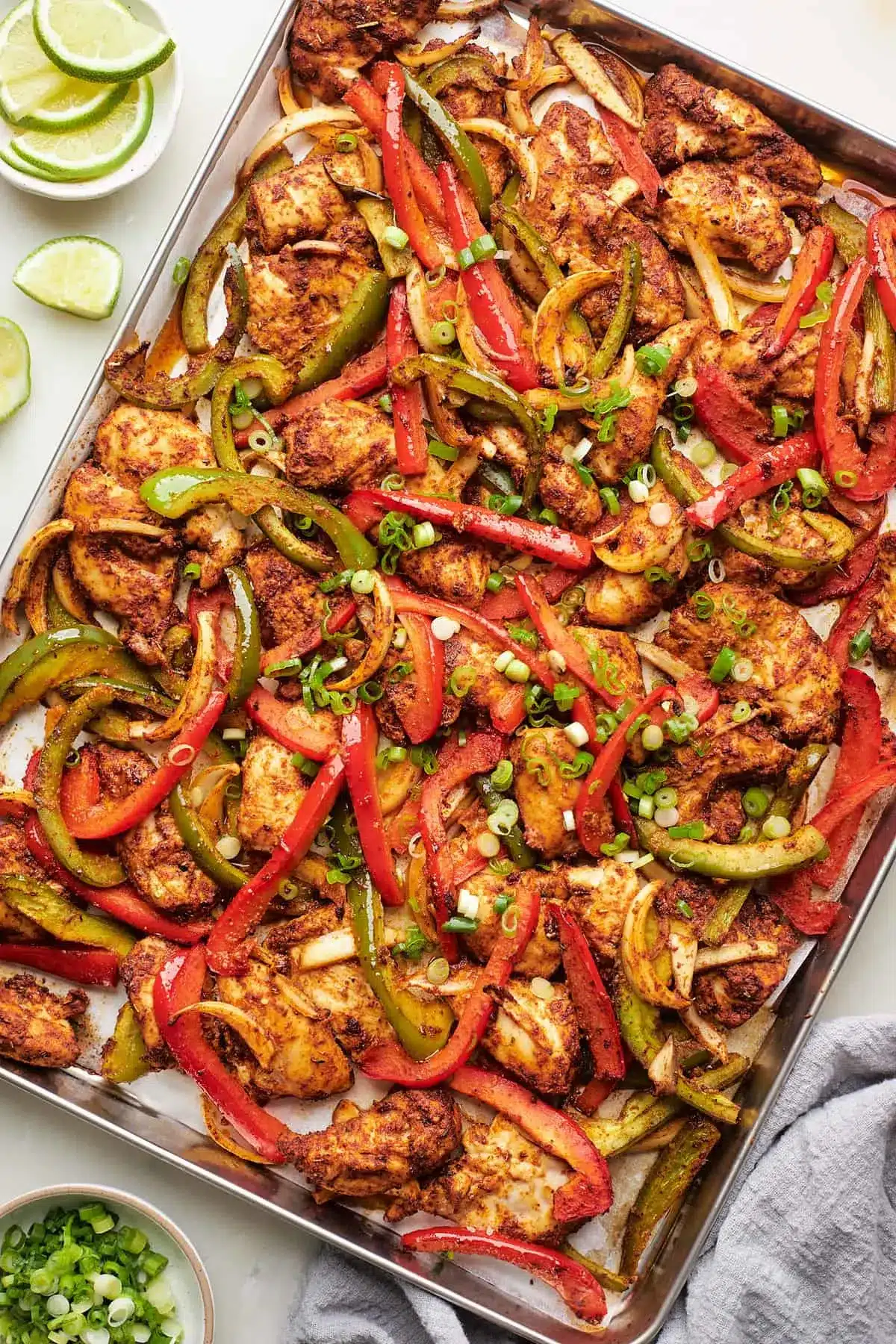
Sheet Pan Chicken Fajitas cook seasoned chicken, bell peppers, and onion together on one pan for a fast, colorful weeknight dinner. The high, even oven heat roasts the vegetables while keeping the chicken tender, and fresh lime juice brightens everything just before serving.
The fajitas make a practical main dish beside crisp grit cakes, which add a creamy corn center and golden exterior to the plate.
Cut the chicken and peppers into similar strips so they roast at the same rate. Even sizing also makes the finished fajitas easier to portion into warm tortillas.
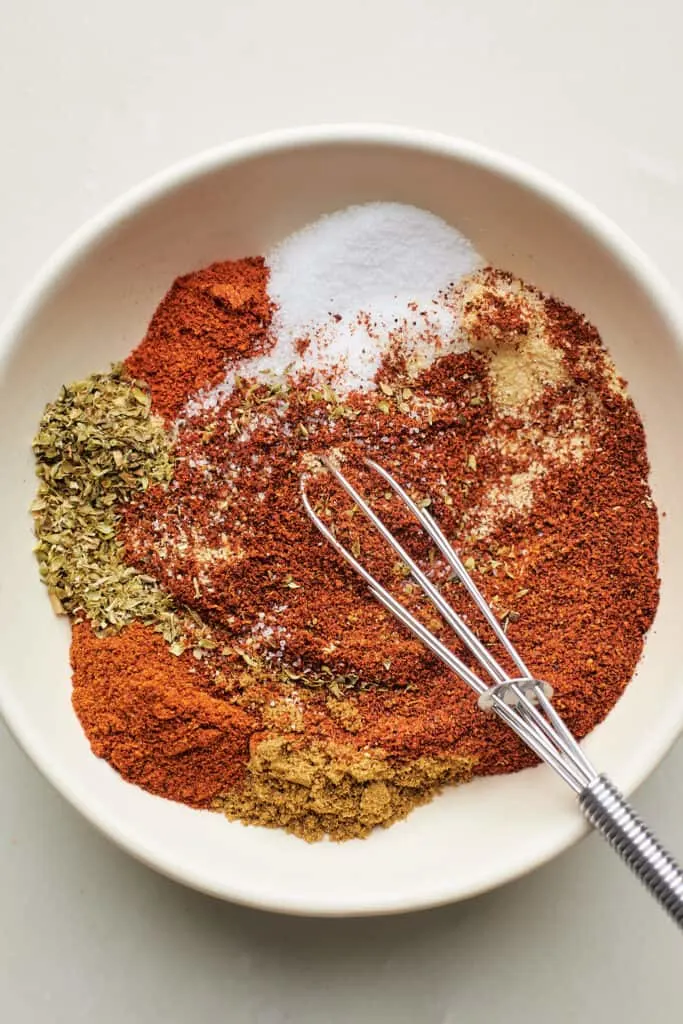
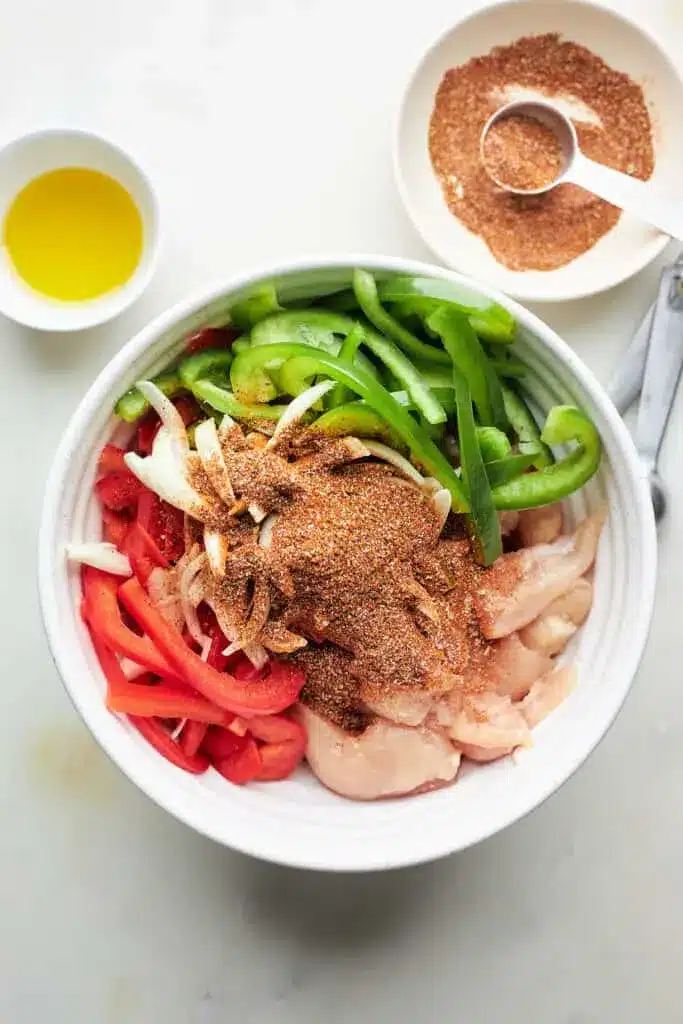
Coat the chicken and vegetables thoroughly with the spice mixture and oil. Spread everything in one layer so the edges roast instead of steaming.
Why the Sheet Pan Method Works
Cutting the chicken and vegetables into similar-size pieces helps them finish at the same time. Spreading everything in one layer encourages browning instead of trapping steam.
A blend of chili powder, cumin, smoked paprika, oregano, garlic, onion powder, and cayenne creates the familiar fajita flavor without requiring a separate sauce.
When a seafood option is useful on the same weekly menu, easy shrimp scampi pasta offers another quick dinner built around a bright citrus finish.
Preparing the Chicken and Vegetables
Slice the peppers and onion evenly, then cut the chicken into pieces that will cook through within the short roasting time. Pat the chicken dry so the oil and spices coat it instead of sliding off.
Toss the chicken and vegetables with olive oil and the spice mixture until every piece is lightly covered. Letting the mixture rest briefly gives the seasoning time to distribute before roasting.
A chilled chicken club pasta salad can serve as a make-ahead alternative when the oven meal is not convenient.
Roasting Without Overcrowding
Line a large sheet pan for easier cleanup, then spread the mixture into a single layer. If the pieces overlap heavily, use a second pan rather than stacking them.
Stir once halfway through cooking to expose new surfaces to the heat. The chicken should be cooked through and the peppers should be tender while still holding their shape.
For food safety, verify the thickest chicken pieces with a thermometer. The USDA safe-temperature chart lists 165°F as the minimum internal temperature for poultry.
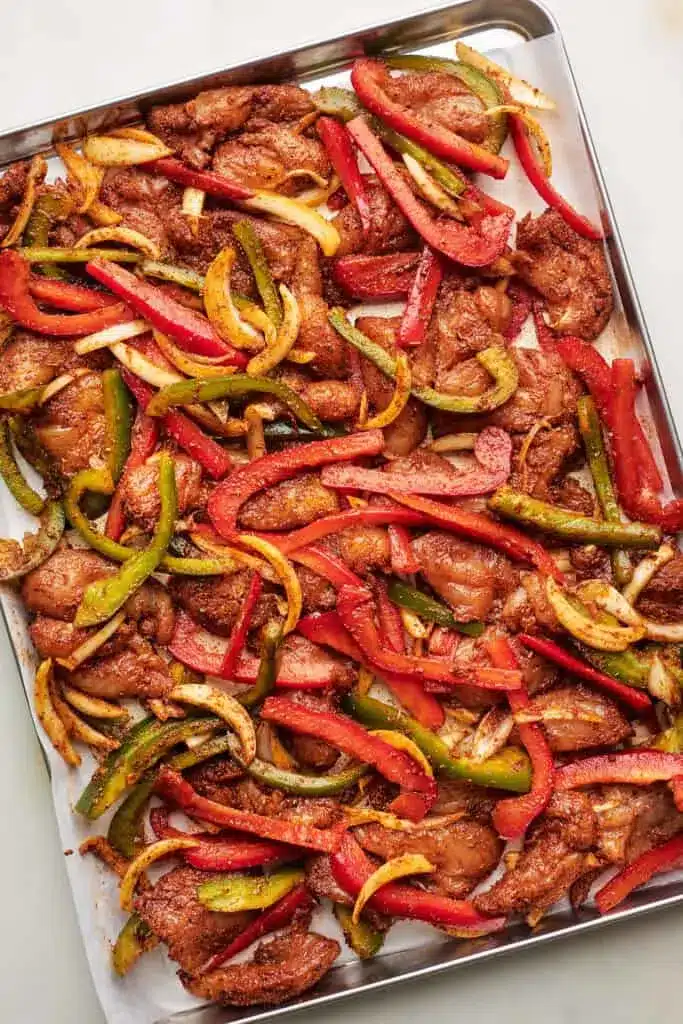
Check the thickest chicken pieces for doneness and look for lightly caramelized pepper edges. A brief broil can deepen color, but watch closely to prevent scorching.
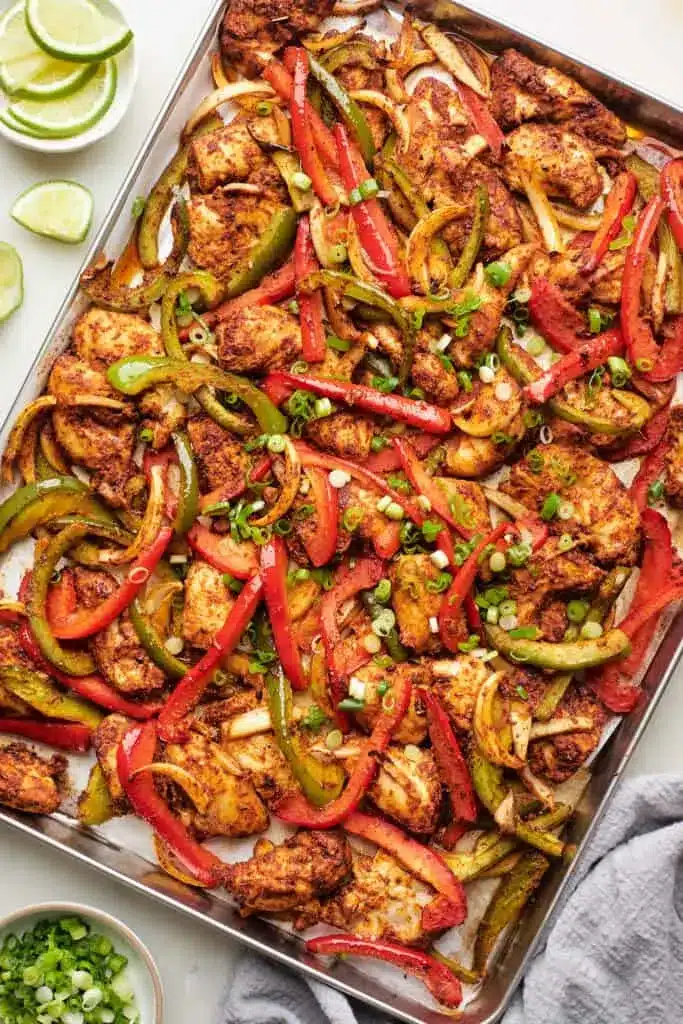
Let the pan rest briefly before serving, then add fresh lime and herbs. The short pause keeps the juices in the chicken while the bright garnish balances the roasted spices.
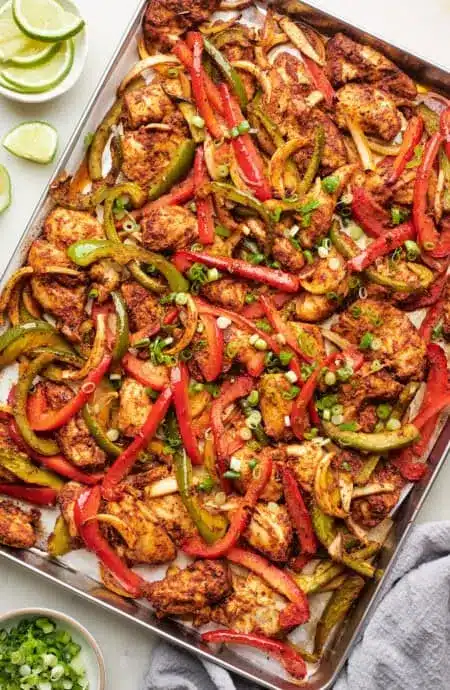
Finishing and Serving
Add fresh lime juice and sliced scallions after the pan leaves the oven. This preserves their fresh flavor and keeps the citrus from becoming dull during roasting.
Serve the filling in warm flour or corn tortillas with salsa, guacamole, sour cream, and rice. Guests can assemble each fajita to suit their preferred balance of chicken, vegetables, and toppings.
A bowl of really good pasta salad works naturally on a larger buffet because it can be chilled before the hot fajitas are cooked.
For a lighter side, Thanksgiving salad contributes crisp greens, apples, pomegranate, and pecans.
The complete dinner recipe collection keeps this one-pan meal with other useful main dishes.
Ingredient Roles and Practical Adjustments
Chicken tenderloins cook quickly and remain easy to portion, but evenly cut boneless chicken breast can follow the same method. The important point is uniform thickness so no small pieces dry out while larger ones finish.
Red, yellow, orange, or green bell peppers can be mixed according to availability. Using more than one color improves the visual contrast, while onion adds sweetness as its edges roast.
Smoked paprika adds depth, cumin supplies warmth, and oregano gives an herbal note. Cayenne controls the heat and can be reduced without changing the basic character of the seasoning.
Olive oil helps the spices cling and supports browning. Use enough to coat the ingredients lightly, but avoid leaving a pool of oil at the bottom of the pan.
Common Problems to Avoid
Pale fajitas usually come from an overcrowded pan or wet ingredients. Dry the chicken, use a wide pan, and leave small gaps so moisture can escape.
Dry chicken often means the pieces were too small or stayed in the oven after reaching the safe temperature. Begin checking early because thin strips cook quickly.
If the vegetables soften before the chicken is ready, cut the chicken smaller next time or slice the peppers slightly wider. Matching the cooking pace produces better texture in every serving.
Make-Ahead and Leftovers
The vegetables can be sliced and the dry spices mixed a day ahead. Keep the chicken refrigerated separately, then combine everything with oil shortly before cooking.
Store cooled leftovers in a covered container and refrigerate promptly. Reheat only the portion needed in a skillet or oven so the vegetables retain more texture.
How to Keep Every Component on Schedule
Chicken and vegetables share one pan successfully only when their size is planned together. Cut the chicken into consistent strips, make the peppers similar in width, and keep the onion wedges substantial enough to soften without disappearing. This gives the poultry time to reach a safe temperature while the vegetables keep lightly browned edges and a recognizable bite.
After coating everything with oil and the listed seasoning, spread the pieces across the widest usable surface of the pan. The goal is contact with hot metal and open space for steam to escape. If the ingredients form a deep pile, divide them between two pans; extra space produces better roasting than extending the cooking time on an overcrowded tray.
Balancing Spice, Lime, and Roasted Flavor
The dry spice blend should coat the chicken and vegetables in a thin, even layer rather than collect in patches. Chili powder and smoked paprika build color, cumin supplies warmth, oregano adds an herbal note, and garlic and onion powders reinforce the savory base. Cayenne controls heat, so it can be reduced while the rest of the blend remains intact.
Fresh lime belongs at the finish because prolonged oven heat weakens its bright flavor. Let the pan rest briefly after roasting, then squeeze the citrus over the warm mixture and fold gently. This final acidity sharpens the spices and balances the sweetness that develops at the edges of the peppers and onion.
A Practical Fajita Serving Setup
Warm tortillas while the sheet pan rests, then place toppings in separate bowls so each serving can be assembled without cooling the entire tray. Salsa, guacamole, sour cream, herbs, scallions, and extra lime all work as finishing choices, but the roasted chicken and vegetables should remain the center of the meal rather than becoming buried under toppings.
For advance preparation, slice the vegetables and combine the dry spices earlier in the day, keeping the raw chicken refrigerated separately. Add oil and seasoning shortly before roasting. This protects the texture of the vegetables and avoids leaving raw poultry mixed with other ingredients longer than necessary.
Checking Doneness Without Drying the Chicken
Begin checking at the lower end of the recipe-card timing because thin strips can move from juicy to dry quickly. Test the thickest chicken piece rather than judging the pan by the smallest strip. At the same time, look for peppers that are tender but still hold their shape and onion edges that have begun to caramelize.
If deeper color is wanted after the chicken is cooked, a very brief broil can finish the surface. Keep the pan close enough to watch continuously, remove it as soon as the edges brown, and avoid using the broiler to compensate for a crowded, watery pan. Proper spacing earlier is the more reliable route to roasted flavor.
Portioning the Pan for Consistent Fajitas
When the tray comes out of the oven, fold the mixture gently from the outside toward the center so the seasoning and lime reach every portion without crushing the softened peppers. Divide the chicken and vegetables together rather than serving all the chicken first; each tortilla should receive the same balance of protein, roasted pepper, and onion.
Keep the hot filling on the sheet pan instead of transferring it immediately to a deep bowl, where trapped steam can soften the browned edges. If the meal will sit for several minutes, loosely cover only part of the tray and warm tortillas in small batches. This preserves the roasted texture while allowing everyone to assemble fajitas at the table.
Frequently Asked Questions
Can frozen peppers be used?
Fresh peppers brown more effectively. Frozen peppers release additional water and may produce a softer result, though they can work when thoroughly thawed and dried.
Can the fajitas be made less spicy?
Yes. Reduce or omit the cayenne while keeping the chili powder, cumin, paprika, oregano, garlic, and onion powder for flavor.
Why are the vegetables watery?
The pan was likely crowded or the vegetables contained surface moisture. Use a larger pan, dry the ingredients, and roast in one layer.
A slice of pineapple pound cake provides an easy make-ahead finish after the savory fajitas.
PrintSheet Pan Chicken Fajitas Recipe
With a perfect blend of spices and a simple preparation, your family will love this Sheet Pan Chicken Fajitas dinner option.
- Prep Time: 30 mins
- Cook Time: 15 mins
- Total Time: 45 mins
- Yield: 4, 4 servings 1x
- Method: Main Course
- Cuisine: Mexican
Ingredients
- 2 lbs boneless, skinless chicken tenderloins (diced into 1 1/2 pieces)
- 1 large red bell pepper (sliced thinly (about 1/4 inch thick))
- 1 small yellow onion (peeled and sliced thinly, about 1/4 inch thick)
- 4 1/2 tsp ground chili powder
- 1 1/2 tsp ground cumin
- 1 1/2 tsp smoked paprika
- 1 tsp dried oregano
- 3/4 tsp garlic powder
- 1/2 tsp onion powder
- 1/4 tsp cayenne powder
- 1 tbsp kosher salt
- 2 tbsp extra virgin olive oil
- 2 tbsp fresh lime juice
- 3 tbsp scallions (finely chopped)
- flour or corn tortillas (for serving)
- sour cream (for serving)
- guacamole (for serving)
- salsa (for serving)
- cilantro-lime rice (for serving)
Instructions
- Preheat the oven to 375 F.
- In a large bowl, add chicken, bell pepper and onion
- In a small bowl, add all of the spices and salt and whisk to combine.
- Pour extra virgin olive oil and 4 tablespoons fajita mixture onto chicken and vegetables and toss until well-coated. Let sit at room temperature for at least 20 minutes.
- Line a sheet pan with foil or parchment paper and spread chicken and vegetables into single layer. Bake until chicken is cooked through and juices run clear, about 10 to 12 minutes, or until a thermometer inserted into the thickest part of the chicken registers 160 F. Stir once halfway through cooking.
- Just before serving, toss chicken and vegetables with fresh lime juice and scallions. Serve in warmed tortillas with sour cream, guacamole, salsa, cheese and rice.
Nutrition
- Calories: 358 kcal
- Sugar: 3 g
- Fat: 14 g
- Carbohydrates: 8 g
- Protein: 50 g