

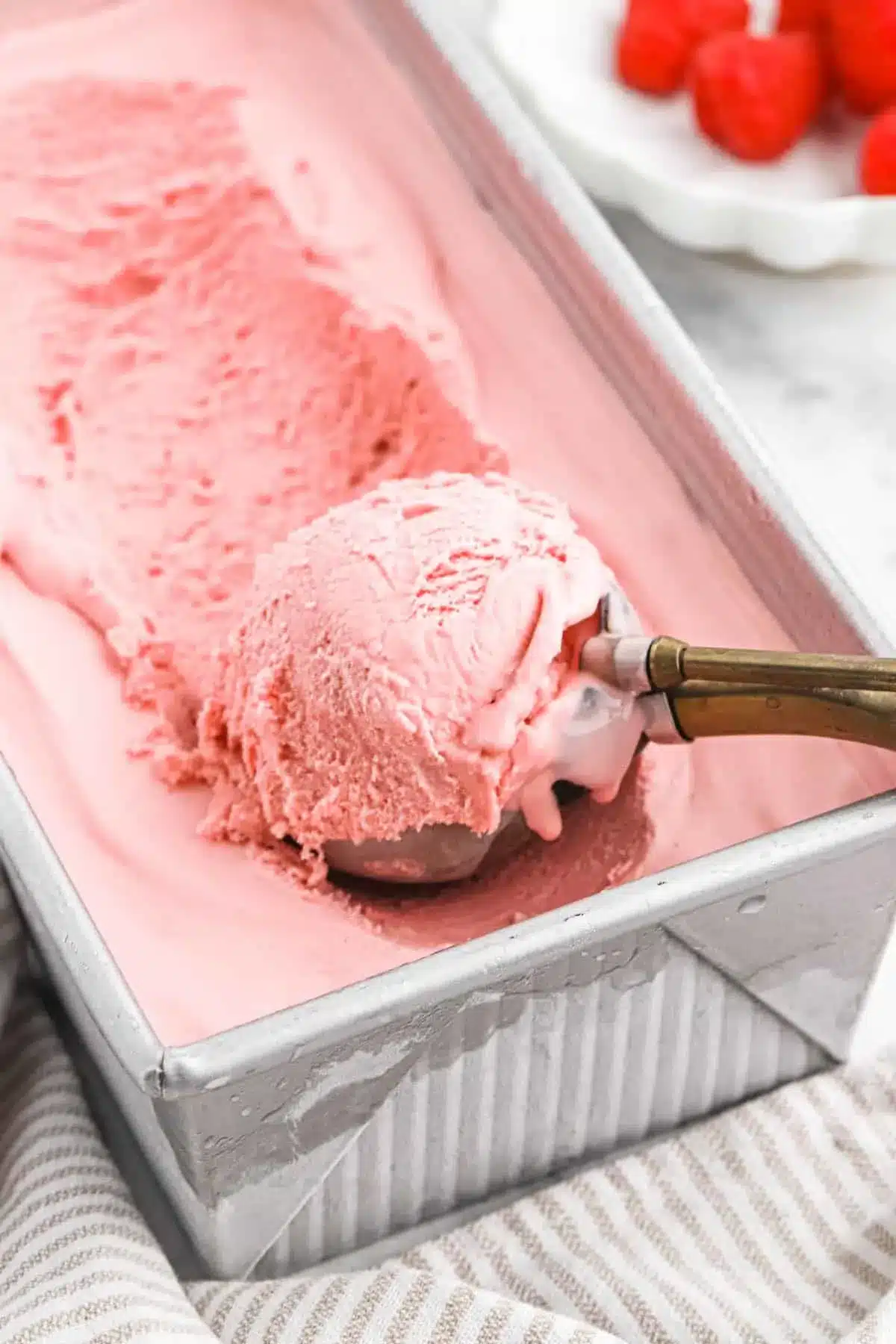
Raspberry Ice Cream combines a cooked egg custard with seedless raspberry puree for a creamy frozen dessert with bright berry flavor. Chilling the base completely before churning creates a smoother texture and helps the ice cream freeze evenly.
The berry flavor connects naturally with Raspberry Lemon Poke Cupcakes, while the two desserts offer different textures and serving options.
This homemade Raspberry Ice Cream is made with a gently cooked custard, fresh raspberry flavor, and a careful chilling process. The result is a smooth frozen dessert with a balance of creaminess and bright fruit flavor.
Table of Contents
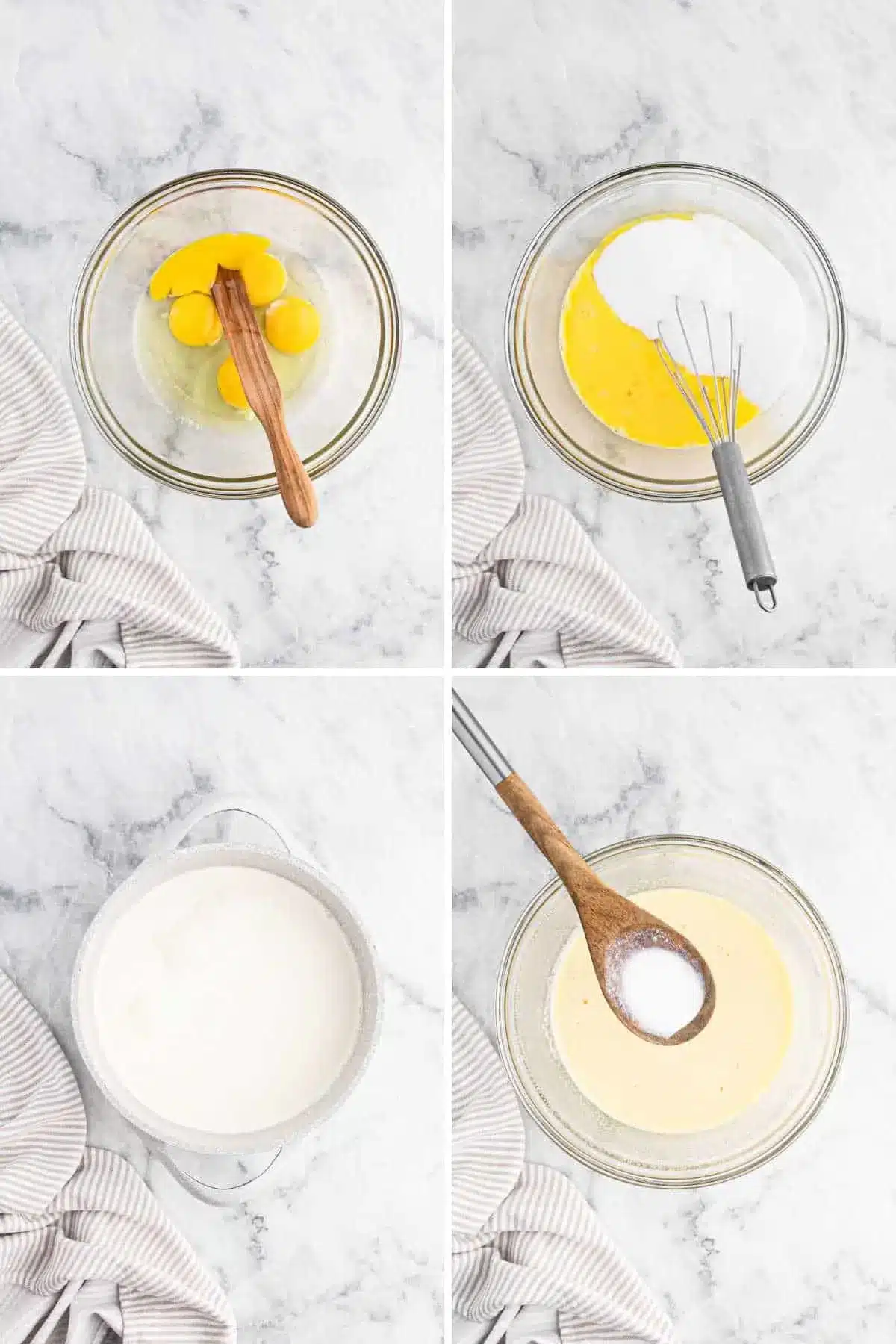
The custard base should thicken gently without boiling. Stir continuously near the bottom of the pan, then chill it completely before the raspberry puree is added.
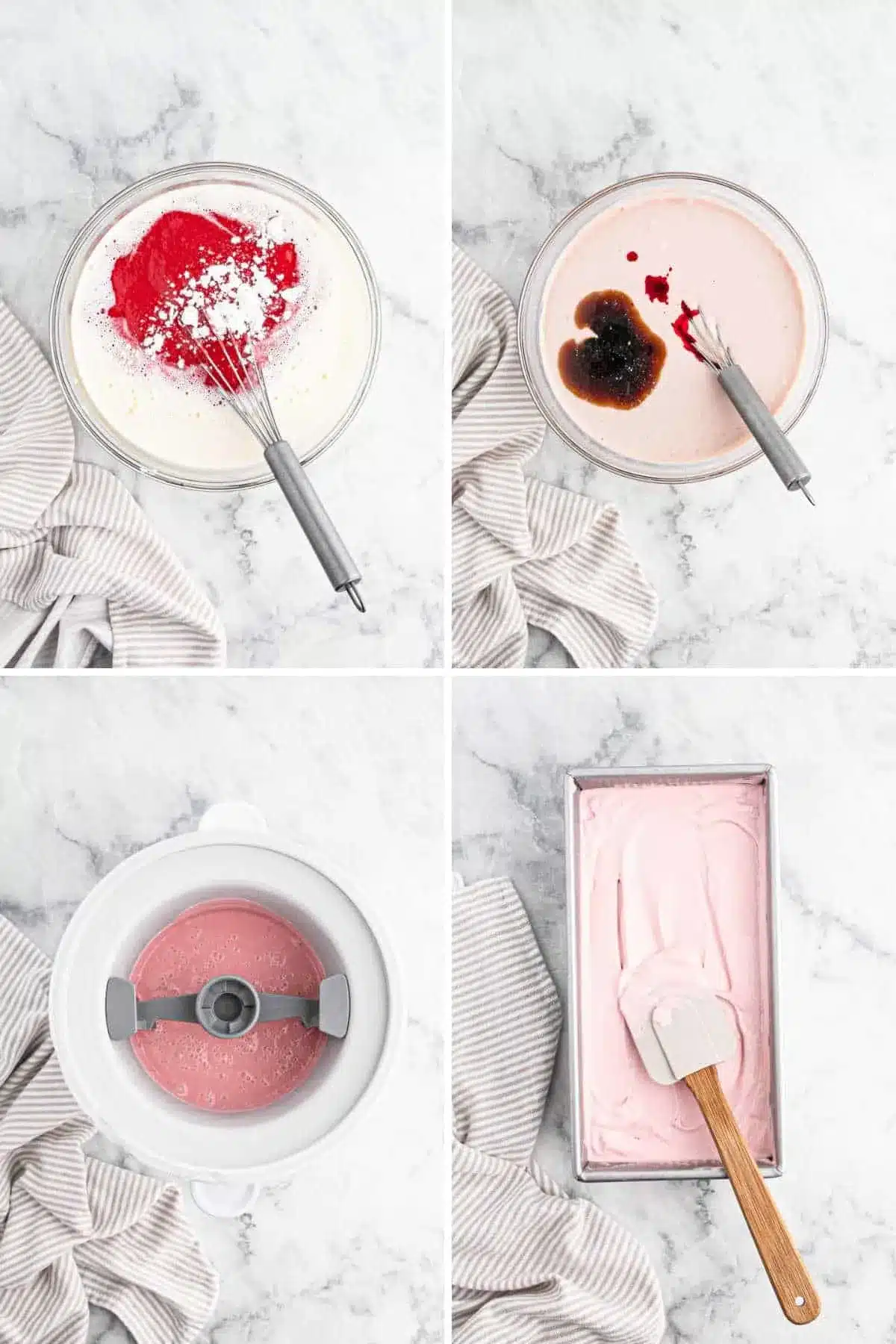
Fold the fruit into the cold base until the color is even, but avoid overmixing if you want visible raspberry ribbons. Taste before churning because frozen desserts can seem less sweet when fully frozen.
Why a Cooked Custard Base Works
Eggs and egg yolks give Raspberry Ice Cream body, while heavy cream and half-and-half provide richness. Heating the mixture gently thickens the custard without scrambling the eggs.
Tempering is the key step: a small amount of hot dairy is whisked gradually into the eggs before the warmed egg mixture returns to the saucepan.
The cooked base needs gentle, steady heat. Whisk a small amount of the warm dairy into the eggs first, then return that tempered mixture to the saucepan while stirring.
This gradual temperature change thickens the custard without creating scrambled egg pieces and preserves the silky texture expected in churned ice cream.
For a chocolate frozen dessert on the same table, Brownie Ice Cream Sandwiches add a fudgy contrast to the fruit-forward scoops.
Preparing the Raspberry Puree
Puree the raspberries with the sugar specified in the recipe card, then strain out the seeds. A smooth puree blends more evenly into the custard and produces a cleaner finished texture.
Add the raspberry puree after the custard has finished cooking. This protects the fresh berry character while distributing the fruit throughout the base.
Straining takes a little time, but it keeps the hard seeds from interrupting the creamy texture. Press the puree through a fine sieve and scrape its underside so none of the smooth fruit mixture is lost.
Mix until the base is evenly pink, or fold more lightly when subtle raspberry ribbons are preferred.
If frozen raspberries are used, thaw them completely and account for any released liquid. Strain the fruit after blending and avoid adding excess watery juice to the custard.
Heating the Custard Safely
Cook the custard over medium-low heat and stir continuously, reaching into the corners of the saucepan.
The mixture is ready when it coats the back of a spoon and holds a clean line drawn through the coating.
Do not let the custard boil. Excessive heat can make the eggs curdle and leave the base grainy instead of silky.
Use the back-of-the-spoon test rather than waiting for bubbles. Remove the custard from the heat when it has thickened appropriately.
For egg safety, the FDA guidance for homemade ice cream explains the importance of properly cooking egg-containing bases or using pasteurized egg products.
Chilling and Churning Raspberry Ice Cream
Strain the finished custard base to catch any small cooked egg pieces, then cool it rapidly in an ice bath.
Refrigerate the custard until completely cold before transferring it to the ice cream maker.
A warm base cannot freeze quickly enough in a home ice cream machine. Starting with properly chilled custard helps the machine form smaller ice crystals for a smoother result.
The ice cream maker bowl must also be prepared according to the manufacturer’s instructions. If it uses a freezer bowl, make sure that bowl has been frozen sufficiently.
Churn according to the machine instructions until the ice cream reaches a thick, soft-serve-like consistency.
Freshly churned Raspberry Ice Cream will be soft. Several hours in the freezer will create a firmer, scoopable texture.
Raspberry Ice Cream Ingredient Roles and Texture
Heavy cream contributes richness, and half-and-half lightens the base enough for a balanced mouthfeel. Using both keeps the ice cream creamy without making it excessively heavy.
Egg yolks contain emulsifiers that help fat and water remain blended. Whole eggs add structure, while sugar sweetens the fruit and helps control how firmly the ice cream freezes.
A small amount of flour supports thickening in the source recipe. It should be fully dispersed so no dry pockets remain in the chilled base.
Vanilla rounds out the tartness of the berries. Food coloring is optional and does not affect the flavor or texture.
Taste the chilled base before churning. Cold temperatures soften the perception of sweetness, so the mixture may taste slightly brighter before freezing.
Use the recipe-card quantities as written rather than adding unmeasured sugar, since the ingredient ratio also influences the final frozen texture.
Common Problems to Avoid
Grainy Custard
A grainy custard usually means the heat was too high or the mixture was not stirred continuously.
Straining can remove small solids, but gentle heat and proper tempering are the best ways to prevent this problem.
Icy Ice Cream
An icy texture can result when the base enters the machine while still warm. Chill the custard thoroughly before churning and prepare the machine according to its instructions.
Ice Cream That Is Too Firm
If the ice cream becomes too firm after freezing, allow the container to stand at room temperature for a few minutes before scooping rather than forcing the scoop through the frozen surface.
Weak Raspberry Flavor
Puree the berries thoroughly and remove the seeds for a smooth, concentrated fruit mixture. Avoid adding excess liquid, which can dilute the raspberry flavor and affect the texture.
Ice Crystals During Storage
Work quickly when moving the churned ice cream into its container so the soft mixture does not melt around the edges before freezing.
Level the surface, cover it directly, and place the container in a consistently cold part of the freezer rather than in the door.
Repeated warming and refreezing encourage larger ice crystals and weaken the smooth custard texture.
What to Serve with Raspberry Ice Cream
Raspberry Ice Cream can be served on its own or alongside cakes, pastries, and other desserts. Its tart berry flavor provides a refreshing contrast to rich baked treats.
Pound Cake
A slice of Pineapple Pound Cake can be served with one scoop when a plated dessert is preferred. The soft cake contrasts with the cold, creamy ice cream.
Homemade Apple Pie
During cooler months, Homemade Apple Pie pairs warm spices and flaky pastry with cold Raspberry Ice Cream.
Brownies and Chocolate Desserts
Chocolate and raspberries make a complementary dessert pairing. Rich brownies or chocolate cake can be served with a scoop of the homemade ice cream.
Fresh Raspberries and Mint
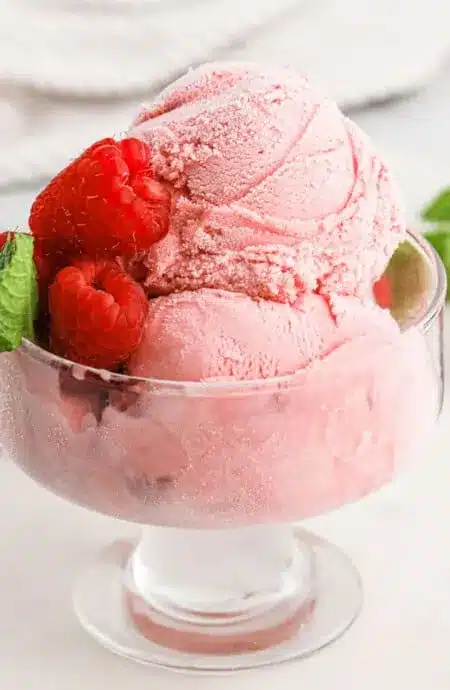
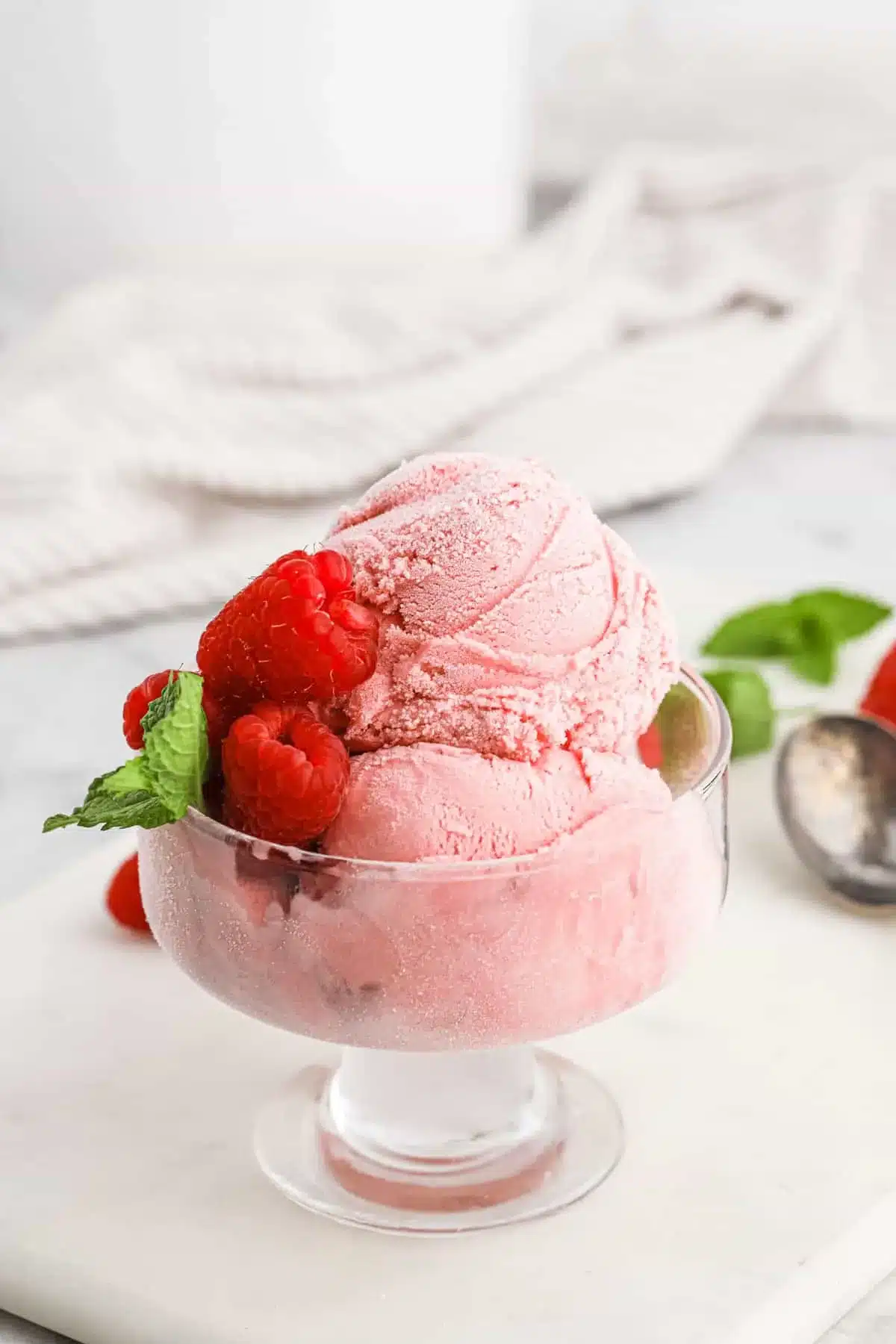
Allow the ice cream to soften for a few minutes before scooping. Fresh raspberries and mint make a simple garnish without competing with the fruit flavor.
How to Store Homemade Raspberry Ice Cream
Transfer the freshly churned ice cream to a shallow freezer-safe container and smooth the surface.
Press parchment paper or food-safe plastic wrap directly against the surface before covering the container. Limiting air exposure helps reduce freezer burn and protect the fresh raspberry flavor.
Store the container toward the back of the freezer, where the temperature is generally more stable than near the door.
Homemade ice cream may develop an icy surface during longer storage. For best texture, keep the container sealed and minimize repeated thawing and refreezing.
Serve with a clean, dry scoop and return the remaining ice cream to the freezer promptly.
Frequently Asked Questions
Can Frozen Raspberries Be Used for Raspberry Ice Cream?
Yes. Thaw frozen raspberries completely, drain excess liquid if necessary, then puree and strain them before adding them to the cooked custard base.
Why Must the Raspberry Ice Cream Base Be Chilled Before Churning?
A cold base freezes faster in the ice cream maker, helping produce smaller ice crystals and a smoother texture. Refrigerate the custard until completely cold before churning.
Can the Raspberry Seeds Remain in the Puree?
They can, but straining creates a smoother ice cream and prevents the seeds from interrupting the creamy texture.
What Does Tempering Eggs Mean?
Tempering means gradually warming beaten eggs by whisking a little hot dairy into them before adding the mixture back to the saucepan. This helps the custard heat evenly without scrambling the eggs. The custard must still be cooked properly.
Does Homemade Raspberry Ice Cream Contain Eggs?
Yes. This recipe uses eggs and egg yolks in its cooked custard base. They contribute richness and structure to the finished ice cream.
Can Raspberry Ice Cream Be Made Ahead of Time?
Yes. The custard needs to be chilled before churning, and the ice cream needs additional freezer time to develop a firm, scoopable texture. Preparing it ahead allows enough time for both stages.
How Can I Prevent Homemade Raspberry Ice Cream from Becoming Icy?
Chill the custard completely before churning, keep the finished ice cream tightly covered, and store it in a consistently cold part of the freezer. Avoid allowing it to melt and refreeze repeatedly.
PrintRaspberry Ice Cream Recipe

Made with less than 10 ingredients, this Homemade Raspberry Ice Cream is a lush, fruity and creamy masterpiece. Treat yourself to a well-deserved scoop (or two) of sweet yet slightly tart decadence!
- Prep Time: 5 mins
- Cook Time: 10 mins
- Total Time: 15 mins
- Yield: 8, 8 servings 1x
- Method: Dessert
- Cuisine: American
Ingredients
- 3 large eggs
- 2 large egg yolks
- 1 ⅔ cups granulated sugar
- 2 cups heavy whipping cream
- 2 cups half and half
- 1 pound raspberries (pureed with 2 tablespoons of granulated sugar then strained of seeds)
- 1 teaspoon all purpose flour
- 2 tablespoons pure vanilla extract
- 4 drops red food coloring (optional)
Instructions
- Beat eggs and egg yolks in a medium sized bowl. Next add sugar to the bowl and whisk together.
- Add heavy cream and half and half to a large saucepan and heat gently; do not let come to a boil.
- Temper eggs by slowly pour 1 cup of hot heavy cream mixture into egg mixture while whisking quickly. This will raise the temperature of the eggs carefully without scrambling them. Then while stirring, pour the tempered egg mixture slowly into the remaining heavy cream mixture in the saucepan.
- Gently heat ice cream base over medium low heat, stirring constantly (especially the corners of the pot), until thickened and reaches 170F on a digital thermometer. The mixture should look silky and coat the back of a spoon so when you run your finger through it, it doesn’t come back together.
- Remove from heat and add raspberry puree, vanilla and flour and stir to combine. Strain through a fine-mesh sieve (to catch any cooked egg pieces) and chill in an ice bath (a bowl set inside of a bowl of ice water) until it’s cooled to room temperature. Then cover with plastic wrap and move into the refrigerator until completely cold, about 2-3 hours.
- Remove mixture from refrigerator.
- Add your mixture to an ice cream maker according to the manufacturer’s instructions and freeze.
Nutrition
- Calories: 509 kcal
- Sugar: 40 g
- Fat: 32 g
- Carbohydrates: 49 g
- Protein: 6 g