

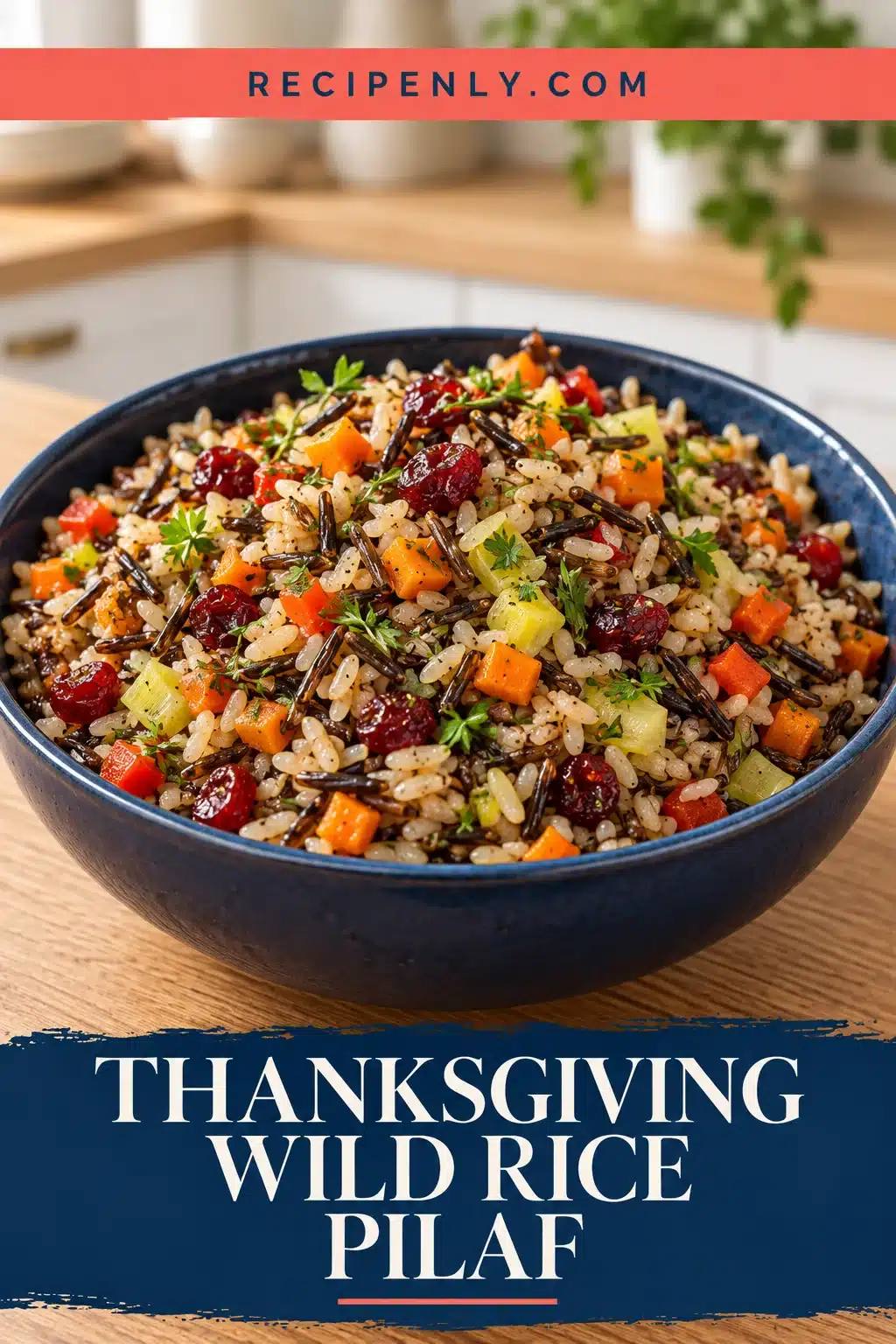
Thanksgiving Wild Rice Pilaf combines nutty wild rice with cranberries, leeks, vegetables, white wine, and fresh herbs. The result is a colorful holiday side that tastes savory first, with small pockets of fruit sweetness and enough texture to remain distinct beside soft casseroles, roasted vegetables, and rich main dishes.
Its combination of grains, vegetables, herbs, and cranberries makes it an easy fit with other dishes from the holiday recipes collection when planning a larger Thanksgiving menu.
Table of Contents
Why This Thanksgiving Wild Rice Pilaf Works
Wild rice brings a pleasantly chewy texture and earthy flavor that holds up well on a crowded holiday plate. Cranberries provide tart sweetness, while leeks, carrot, and bell pepper create an aromatic vegetable base.
Rosemary, sage, thyme, and oregano connect the pilaf to familiar Thanksgiving flavors without requiring a heavy sauce.
The pilaf fits naturally beside the slow-simmered flavor of Southern Collard Greens Recipe on a Southern holiday menu.
What Is Rice Pilaf?
Rice pilaf is a rice dish in which the vegetables and rice are first sautéed in a small amount of fat before the grains finish cooking in a flavorful broth.
This Thanksgiving version follows the same basic method but uses a wild-rice blend, leeks, carrots, cranberries, fresh herbs, white wine, and vegetable stock to give the dish a more seasonal flavor.
Because this pilaf is broth-based rather than creamy, it balances richer holiday sides such as Cheesy Scalloped Potatoes.
Flavor and Ingredient Balance
Wild rice blend: A mixed wild-rice blend gives the finished pilaf a more varied texture than one uniform grain.
Leeks: Sautéing the leeks first softens their sharper raw flavor and brings out their natural sweetness.
Carrot and bell pepper: These vegetables add color, sweetness, and a softer texture among the chewy rice grains.
Cranberries: They provide small pockets of tart sweetness without turning the dish into a sweet rice recipe.
White wine: Dry white wine adds acidity before the vegetable stock is introduced.
Fresh herbs: Rosemary, sage, thyme, and oregano give the pilaf the savory herb profile associated with Thanksgiving cooking.
Vegetable stock: The rice absorbs the stock while cooking, seasoning the grains throughout.
For another warm vegetable side with a sweeter skillet flavor, Best Fried Corn Recipe brings a completely different texture to the table.
How to Make Thanksgiving Wild Rice Pilaf
1. Sauté the Leeks
Cook the chopped leeks in a small amount of fat until they soften, release their sweetness, and begin to lightly caramelize.
2. Add the Vegetables and Wild Rice
Add the carrots and wild-rice blend to the aromatic leek base.
Briefly sautéing the rice before adding liquid helps coat the grains with the aromatic mixture.
3. Add the White Wine
Pour in the dry white wine and allow it to reduce before adding the vegetable stock.
4. Add Cranberries, Herbs, and Stock
Add the cranberries, fresh herbs, bay leaves, and vegetable stock.
Cover the pan tightly and cook over low heat until the rice is tender and the cooking liquid has been absorbed.
5. Rest and Fluff
Once the rice has finished cooking, let the pilaf rest covered briefly so trapped steam can finish softening the grains.
Remove the bay leaves and woody herb stems, then fluff gently with a fork before serving.
A crisp Thanksgiving Salad adds a fresh contrast beside the warm pilaf.
How the Method Builds the Right Texture
Sautéing the leeks before adding liquid softens their sharpness and creates a sweeter aromatic base.
Briefly toasting the rice with the herbs coats the grains and helps preserve their individual texture during cooking.
Wild-rice blends vary, so tenderness matters more than relying on one exact visual cue. The grains should be open and pleasantly chewy rather than hard in the center or mushy on the outside.
Avoid stirring constantly once the stock is added. A tight lid and low heat allow the rice to cook more evenly without breaking the grains.
For another Southern-style side with crisp edges and a very different grain texture, Grit Cakes are another option.
Practical Preparation Tips
- Wash the leeks carefully. Soil and grit can hide between their layers.
- Keep the vegetable dice fairly small. Smaller pieces distribute more evenly throughout the rice.
- Avoid lifting the lid repeatedly. Escaping steam can slow the cooking process.
- Do not stir aggressively. Fluff the grains gently after cooking instead.
- Remove bay leaves and woody herb stems. Take them out before serving.
- Reserve some garnish. Extra cranberries and fresh herbs can refresh the appearance of the pilaf just before serving.
A pan of Honey Butter Cornbread works well beside the pilaf when you want both grains and bread on the holiday table.
Serving Ideas
Serve Thanksgiving Wild Rice Pilaf as a plant-forward holiday side or pair it with turkey, chicken, squash, mushrooms, or roasted root vegetables.
Because it is not cream-based, the pilaf adds a lighter element beside mashed potatoes, casseroles, stuffing, rich gravies, and other softer dishes.
For an appetizer that can be prepared before the main meal, Deviled Eggs Recipe fits naturally into the same holiday menu.
Storage and Reheating
Let leftover Thanksgiving Wild Rice Pilaf cool, then transfer it to an airtight container and refrigerate it.
Refrigerator: The supplied storage guidance allows the pilaf to be stored in an airtight container for up to 1 week.
Microwave: Place a portion in a microwave-safe dish and heat on high for about 1–2 minutes, or until warmed through.
Stovetop: Reheat gently with a spoonful of vegetable stock or water. Cover the pan so the grains steam rather than dry out.
After reheating, fluff the rice and refresh the surface with reserved cranberries or fresh herbs if desired.
For general cooling, refrigeration, and reheating practices, follow the USDA leftovers and food-safety guidance.
Useful Variations
Skip the wine: Replace the white wine with an equal amount of vegetable stock.
Add toasted pecans: Chopped toasted pecans can add crunch to the chewy rice.
Add diced apple: Apple can reinforce the autumn flavor profile.
Keep the additions balanced: Avoid adding too many wet ingredients because they can change the amount of liquid available to cook the rice properly.
A warm slice of Homemade Apple Pie can finish the meal with another classic fall flavor.
Frequently Asked Questions
Can this Thanksgiving Wild Rice Pilaf be made without wine?
Yes. Replace the wine with an equal amount of vegetable stock. A small squeeze of lemon after cooking can add some of the brightness normally provided by the wine.
Is wild rice gluten-free?
Wild rice itself is naturally gluten-free, but packaged rice blends and vegetable stock should still be checked when cross-contact or added ingredients are a concern.
Can Thanksgiving Wild Rice Pilaf be prepared ahead?
Yes. Prepare it ahead, cool it, refrigerate it in an airtight container, and reheat it covered with a small amount of stock or water before serving.
PrintThanksgiving Wild Rice Pilaf

Simple Thanksgiving rice pilaf recipe made with wild rice, sweet and tangy cranberries, leeks and herbs, a lovely festive side dish worthy of the holiday dinner.
- Prep Time: 10 mins
- Cook Time: 60 mins
- Total Time: 70 mins
- Yield: 4, 4 people 1x
- Method: Side Dish
- Cuisine: Italian
Ingredients
- 1.5 cups wild rice blend
- 1 small leek ((chopped and rinse well))
- 1 bell pepper (-diced)
- 1 carrot (-grated)
- 1/3 cup vegan white wine
- 1/2 cup dried cranberries
- 1/3 cup dried cranberries (-for garnish)
- 3 cups low sodium vegetable stock or water
- 2 leaves bay
- 1 sprig rosemary
- 1 sprig sage
- 8 sprigs fresh thyme
- 3 sprigs fresh oregano
- 1 tbsp dried oregano
- 1 pinch red pepper flakes or to taste
- 1 splash water (or 2 tsp olive oil)
Instructions
- Preheat a large deep skillet or pot over medium low flame. Add a splash of water (or a drizzle of olive oil) and the chopped leeks. Sautee with a pinch of sea salt until translucent.
- Stir in the grated carrot, thyme, oregano, sage, rosemary, bay leaves and red pepper flakes. Add the wild rice mix and stir well to combine. Allow it to toast together with the aromatics for a couple of minute.
- Add in the chopped bell pepper and 1/2 cup of the cranberries. Pour in the wine and simmer until reduced by half then add the vegetable stock (or water). Stir and taste for seasonings. Add more sea salt to your taste if desired.
- Bring the rice to a simmer, cover with a tight lid and cook on low flame for 50 minutes. Turn off the heat but do not remove the lid. Allow the rice to sit covered for 10 to 15 minutes and continue cooking in its own steam.
- Discard the bay leaves and the woody sprigs from the herbs. Use a fork and gently fluff up the rice.
- Serve warm or cold garnished with the remaining cranberries and fresh herbs.
Nutrition
- Calories: 358 kcal
- Sugar: 22 g
- Fat: 1 g
- Carbohydrates: 77 g
- Protein: 10 g