
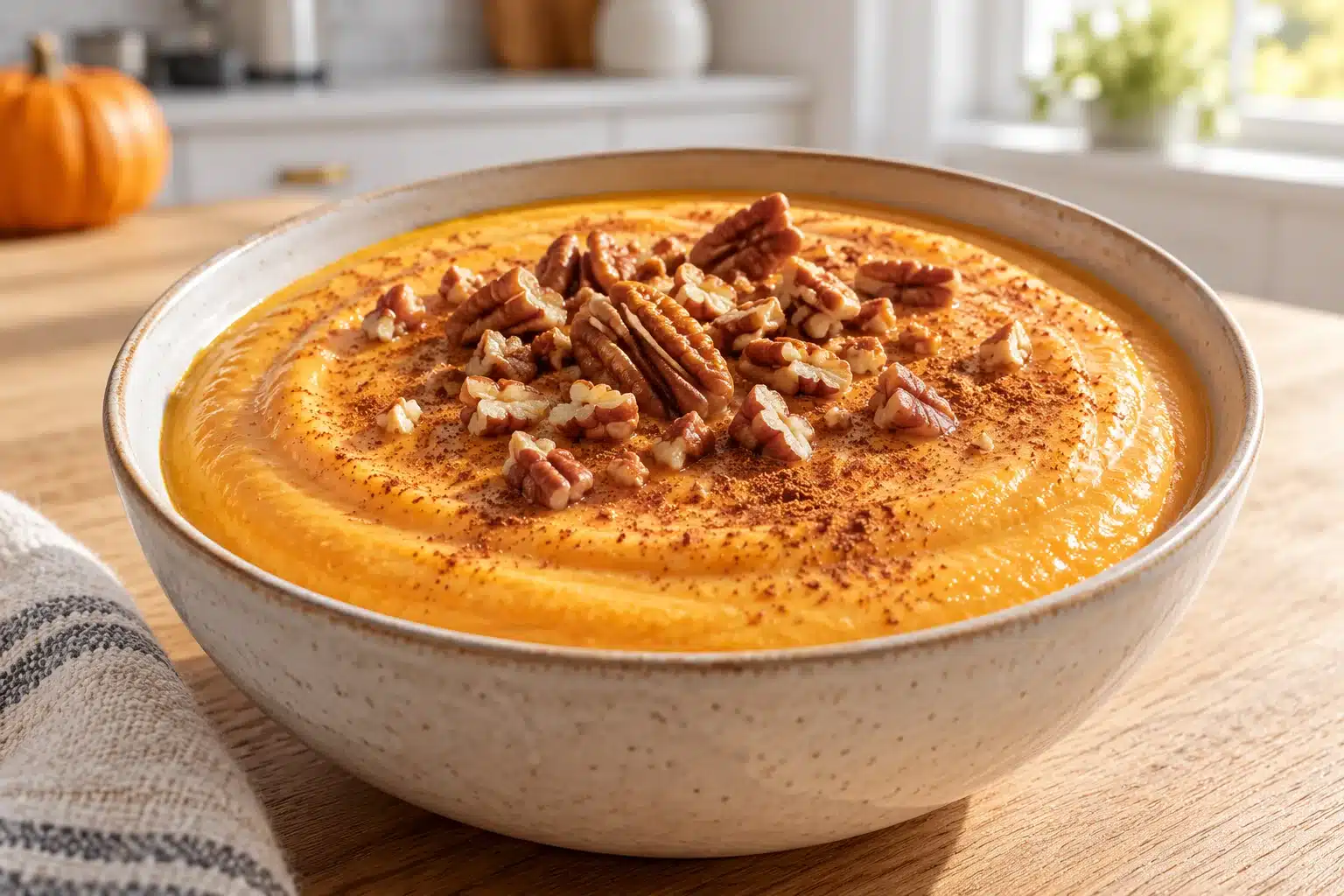
Looking for a pumpkin cottage cheese bowls chalky taste fix? If your pumpkin breakfast bowl feels grainy, powdery, or full of tiny curds, the easiest place to start is blending the cottage cheese and pumpkin puree until smooth. A small amount of almond milk can help if the mixture is too thick for your blender. Taste before adding any extra maple syrup or spices.
Pumpkin cottage cheese bowls combine the tangy flavor of cottage cheese with thick pumpkin puree, almond butter, maple syrup, and pumpkin pie spice. They can make a simple no-cook breakfast, but their texture depends heavily on the cottage cheese you choose and how thoroughly the ingredients are mixed.
This guide explains what makes the mixture taste chalky, how to improve a batch that is already prepared, and how to make the proposed pumpkin cottage cheese bowl without relying on unverified food-science shortcuts.
Table of Contents
- Quick Fix for Chalky Pumpkin Cottage Cheese Bowls
- Why Pumpkin Cottage Cheese Tastes Chalky
- Texture Troubleshooting Chart
- Pumpkin Cottage Cheese Bowl Ingredients
- What Each Ingredient Does
- How to Make Creamy Pumpkin Cottage Cheese Bowls
- How to Blend Cottage Cheese Smoothly
- How to Fix a Bowl That’s Already Grainy
- How to Improve the Flavor Without Extra Sugar
- Common Mistakes to Avoid
- Variations and Substitutions
- Protein and Nutrition Considerations
- Make-Ahead and Storage
- What to Serve with Pumpkin Cottage Cheese Bowls
- Frequently Asked Questions
Quick Fix for Chalky Pumpkin Cottage Cheese Bowls
If you’ve already stirred cottage cheese and pumpkin together and the result feels gritty, you do not necessarily need to throw away the mixture or start over.
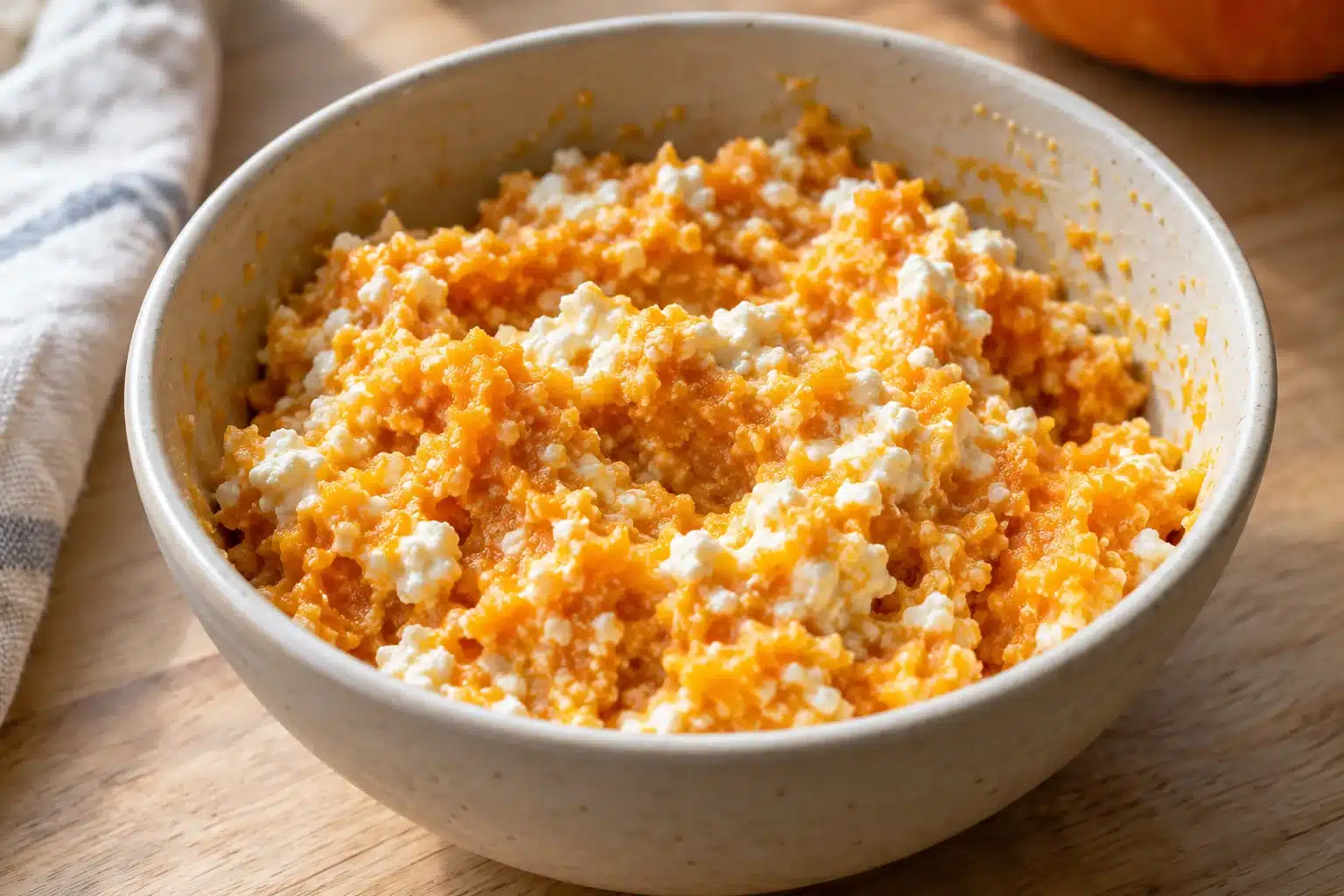
First, look at the consistency. Are individual cottage cheese curds still visible? Is the mixture so thick that it sticks to the sides of the bowl? Or is it already smooth but tastes tangier than you expected?
These issues need different solutions. Blending helps with visible curds. A little liquid helps a mixture that is too thick. Sweetness and flavor should be adjusted separately after the texture is corrected.
- Transfer the mixture to a blender. Use equipment suitable for a small batch.
- Blend until the curds become less visible. Pause and scrape the sides if necessary.
- Check the thickness. Add a little of the recipe’s almond milk if the mixture is difficult to blend.
- Blend again. Stop when the bowl looks uniform and creamy.
- Taste before adjusting flavor. More maple syrup cannot fix remaining lumps.
- Serve or chill briefly. The original draft suggests an optional short chill before topping.
A blender changes the physical texture by breaking up curds and distributing ingredients more evenly. It does not guarantee that every cottage cheese brand will taste identical.
Why Do Pumpkin Cottage Cheese Bowls Taste Chalky?
1. Cottage Cheese Naturally Contains Curds
Cottage cheese is different from smooth yogurt or cream cheese. Many varieties contain visible curds surrounded by a creamy liquid.
Those curds are normal. However, when combined with thick pumpkin puree, the individual pieces may create a texture that feels grainy rather than mousse-like.
Small-curd cottage cheese and large-curd cottage cheese may behave differently. Even two brands with the same fat percentage can have different textures.
2. The Pumpkin Puree May Be Coarse or Thick
Plain pumpkin puree varies in smoothness. Some products are uniformly blended, while others contain noticeable plant fibers or a thicker consistency.
If both your cottage cheese and pumpkin are slightly grainy, simply stirring them together may not give you the creamy breakfast bowl you expected.
3. The Mixture May Be Too Thick for Your Blender
Blenders need enough movement to circulate the ingredients. A very thick mixture may collect around the blades without processing evenly.
That is where the recipe’s tablespoon of almond milk may help. Add it gradually rather than turning the entire bowl into a thin drink.
4. Grainy Texture and Tangy Flavor Are Different Problems
Sometimes readers describe cottage cheese as chalky when they mean it tastes tangy, salty, or less sweet than expected.
Blending can reduce lumps, but it doesn’t eliminate all the natural flavor of cottage cheese. Taste your ingredients separately when determining whether texture or flavor is the issue.
5. The Starting Dairy Product Matters
Use fresh, safely stored cottage cheese. Its curd size, creaminess, and flavor all influence the final bowl.
There is no reliable basis for claiming pumpkin starch necessarily reacts with cottage cheese proteins to cause chalkiness. The observable texture is a more practical guide.
Pumpkin Cottage Cheese Texture Troubleshooting Chart
| What you notice | Possible cause | First adjustment |
|---|---|---|
| Visible white curds | Cottage cheese wasn’t blended enough | Blend longer, scraping the sides |
| Very thick, paste-like bowl | Not enough available liquid for blending | Add almond milk gradually |
| Thin, watery bowl | Too much added liquid or watery ingredients | Stop adding milk; reassess proportions |
| Fibrous pumpkin pieces | Coarse pumpkin puree | Use smoother puree |
| Too tangy or salty | Flavor of the cottage cheese | Review the starting dairy product |
| Unusual spoiled smell | Potential food-safety issue | Discard; do not mask it |
Change one thing at a time. If you add more milk, maple syrup, pumpkin, and almond butter simultaneously, it becomes harder to understand what improved or worsened the texture.
Pumpkin Cottage Cheese Bowl Ingredients
The following quantities come directly from the supplied recipe draft:
- 200 g cottage cheese
- 80 g plain pumpkin puree
- 1 tablespoon almond butter
- 1 tablespoon maple syrup
- 1/2 teaspoon pumpkin pie spice
- 1 tablespoon almond milk
- Pecans for topping — optional; quantity not provided
The formula has not been independently kitchen-tested. The source does not specify a particular cottage cheese fat percentage or brand, and those choices affect flavor and consistency.
Choose plain pumpkin puree, not pumpkin pie filling. The recipe already contains maple syrup and pumpkin pie spice, so a sweetened, seasoned filling would change the proportions.
What Each Ingredient Does
Cottage Cheese
Cottage cheese forms the base of the bowl. It contributes the dairy flavor and the curd structure that blending is intended to smooth out.
Pumpkin Puree
Pumpkin brings the characteristic orange color, mild earthy flavor, and a thicker texture. Its moisture content affects how easily the bowl blends.
Almond Butter
Almond butter adds richness and nutty flavor. Use the measured tablespoon rather than adding an arbitrary large quantity to fix the texture.
Maple Syrup
Maple syrup contributes sweetness. It is useful for balancing flavor but doesn’t necessarily remove cottage cheese lumps.
Pumpkin Pie Spice
Pumpkin pie spice supplies familiar warm spices. The source specifies one-half teaspoon for the proposed bowl.
Almond Milk
The tablespoon of almond milk provides additional liquid for blending. Its main practical role is making a thick mixture easier to circulate in the blender.
Pecans
Pecans provide an optional crunchy topping. Keep them separate until serving if you want a smooth base with a deliberate contrast in texture.
How to Make Creamy Pumpkin Cottage Cheese Bowls
Step 1: Measure the Ingredients
Weigh 200 g of cottage cheese and 80 g of plain pumpkin puree. Measure the almond butter, maple syrup, pumpkin pie spice, and almond milk according to the supplied formula.
Accurate measurements make the result easier to repeat. Adding extra pumpkin or liquid before testing the original proportions can make it difficult to identify the cause of a texture problem.
Step 2: Add the Ingredients to a Blender
Place the cottage cheese, pumpkin puree, almond butter, maple syrup, pumpkin pie spice, and almond milk into a blender suitable for the batch size.
If your blender has a minimum-fill requirement, follow its instructions. A very large blender may not circulate such a small amount of food efficiently.
Step 3: Blend Until the Mixture Looks Smooth
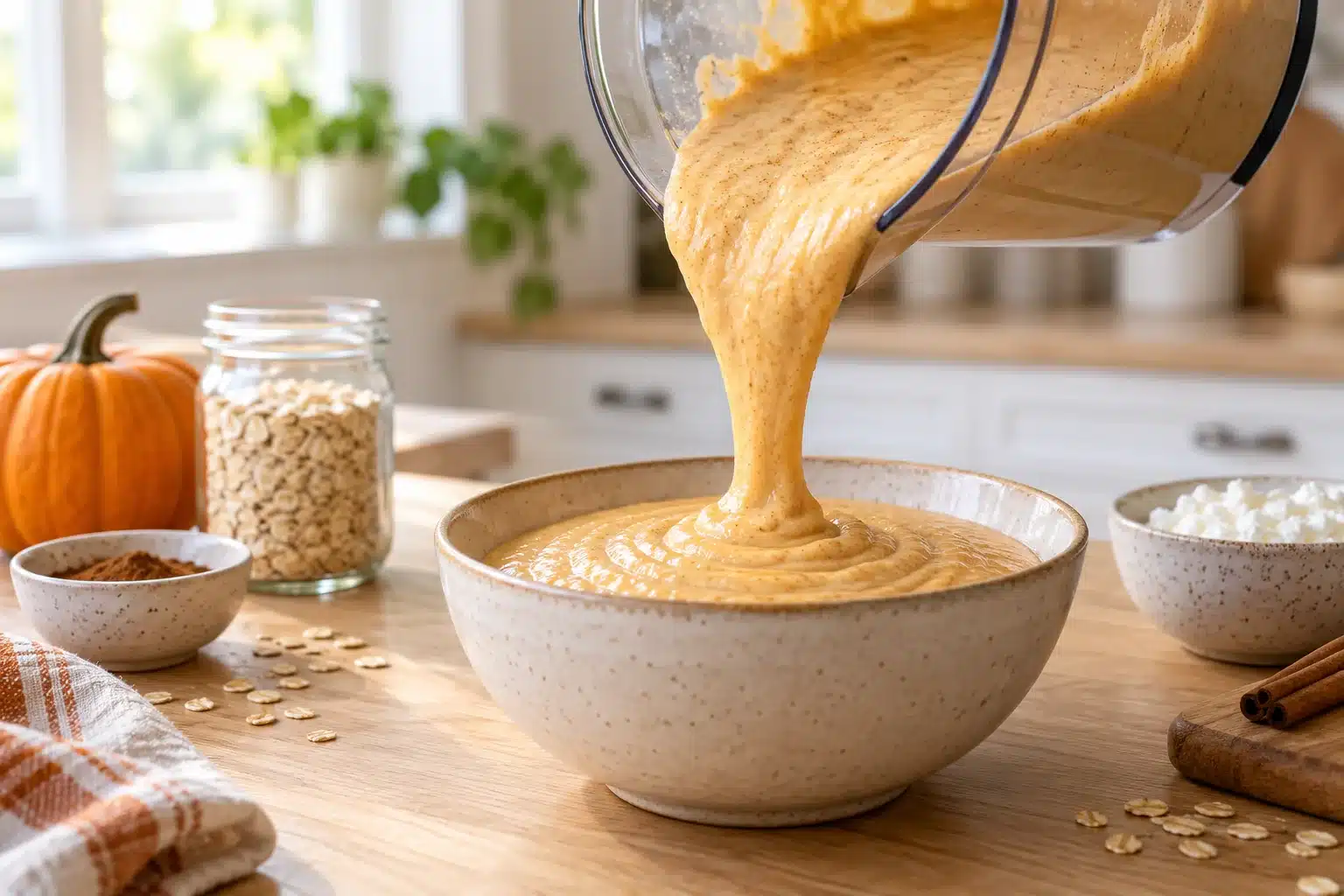
Blend until the cottage cheese curds become less visible and the mixture develops a more uniform appearance.
Pause the blender and scrape down the sides as needed. Do not insert a utensil while the blades are running.
Step 4: Adjust the Consistency Carefully
If the mixture is too thick to blend properly, add a small additional splash of almond milk and process again. Do not add more than necessary because excess liquid can make the bowl runny.
Step 5: Taste Before Changing the Flavor
Once the texture is acceptable, taste the mixture. Decide whether the original maple syrup and spice quantities suit your preference before making optional adjustments.
Step 6: Transfer to a Serving Bowl
Spoon the blended mixture into a bowl. Look for a creamy, spoonable consistency rather than visible clumps of cheese.
Step 7: Chill Briefly if Desired
The original outline suggests an optional chill of approximately 10 minutes. This is a serving preference, not a guaranteed food-science requirement for producing smoothness.
Step 8: Add the Topping and Serve
Finish with pecans if desired and suitable for your dietary needs. The source does not specify a measured topping quantity, so that amount remains optional.
How to Blend Cottage Cheese Smoothly
The right equipment makes a difference, especially when working with a small batch.
Use a Suitable Blender
A personal blender, small food processor, or another suitable appliance may work depending on the amount being prepared. Follow the manufacturer’s minimum-volume and operating instructions.
Scrape the Sides
Thick cottage cheese mixtures can cling to the container. Pausing to scrape the sides helps distribute ingredients without continuing to run the blades against a stationary mixture.
Use Liquid for Circulation, Not Just Thinness
The goal isn’t to make the bowl watery. A little almond milk may allow the blender to move the mixture more consistently.
Check Before Adding More
Stop blending occasionally and inspect the texture. If the mixture is already smooth, additional liquid or extended processing may be unnecessary.
Don’t Promise Mousse from Every Brand
Blending can create a smoother texture, but results depend on the original cottage cheese, pumpkin puree, and equipment.
How to Fix a Pumpkin Cottage Cheese Bowl That’s Already Grainy
If the mixture is already in your breakfast bowl, transfer it to the blender before adding more ingredients. Start by breaking down the visible curds.
If blending alone improves the consistency, there’s no need to add more almond milk or syrup.
If the mixture is too thick to circulate, add liquid in small increments. Check the texture after each change and stop when it becomes creamy enough to spoon.
If the remaining problem is a tangy cottage cheese flavor rather than graininess, evaluate that separately. More blending is unlikely to make a fundamentally different cheese flavor disappear.
For an alternative breakfast dish with a deliberately different texture, our Grit Cakes are made to be firm enough to shape and cook, while this pumpkin bowl is intended to be soft and spoonable.
How to Improve the Flavor Without Adding Excess Sugar
Start by tasting the cottage cheese and pumpkin separately. If either ingredient has a flavor you dislike, mixing them together may not fully hide it.
The proposed recipe uses maple syrup and pumpkin pie spice to balance the dairy tang and pumpkin flavor. Those ingredients contribute flavor but do not solve visible curds.
You can experiment with different cottage cheese brands in future batches. A product with a creamier texture or milder flavor may suit you better, but the exact result needs to be judged by taste.
Almond butter contributes a nutty note and richness. Adding excessive amounts will also change the intended recipe’s composition, so use the original measured tablespoon as the starting point.
Common Pumpkin Cottage Cheese Bowl Mistakes
Stirring Instead of Blending When You Want a Smooth Bowl
Stirring combines the ingredients but leaves many curds intact. If a smooth texture is important, use a suitable blender.
Adding Too Much Almond Milk
Excess liquid can turn a thick breakfast bowl into a drink. Add it gradually, assessing the mixture after each adjustment.
Using Pumpkin Pie Filling
Pie filling contains additional ingredients that change the intended balance of flavor and sweetness. Use plain pumpkin puree.
Assuming Graininess Means Spoilage
Cottage cheese naturally contains curds, so graininess alone does not prove the product is unsafe. However, any signs of improper storage or spoilage should be taken seriously.
Masking a Food-Safety Problem
Never use maple syrup, spice, or another strongly flavored ingredient to disguise food that may have spoiled.
Adding Unmeasured Protein Powder
The supplied formula does not contain protein powder. Adding it changes both texture and nutrition and may contribute a powdery sensation of its own.
Variations and Substitutions
Different cottage cheese: You can compare brands or curd sizes, but this changes the original starting ingredient and may affect consistency.
Different pumpkin puree: Homemade puree may be thicker or looser than canned pumpkin. Record its consistency when evaluating the recipe.
Less sweet: Adjusting the maple syrup affects taste, but the revised version should be treated as a personal variation.
No pecans: The topping is optional and can be omitted if you don’t want crunch or need to avoid tree nuts.
Different milk: Another suitable milk may change flavor and texture. The original formula specifies almond milk.
The recipe contains dairy and almonds, with optional pecans. It is not dairy-free or nut-free as written.
Are Pumpkin Cottage Cheese Bowls High in Protein?
Cottage cheese generally contains protein, but the precise amount depends on the product. The other ingredients also contribute to the final nutrition profile.
The submitted recipe does not identify a brand or provide verified nutrition calculations. For that reason, it would be misleading to claim an exact protein count, calorie total, or fixed macronutrient breakdown.
Use the nutrition labels on your actual cottage cheese, almond butter, almond milk, and other ingredients if you need accurate values.
The bowl may fit into a protein-containing breakfast, but it should not be described as a guaranteed treatment for weight management or another health condition.
Make-Ahead and Storage Tips
This is a dairy-based recipe, so keep the finished mixture refrigerated until serving. If preparing ahead, use a clean covered container and follow safe food-storage practices.
The FoodSafety.gov guide to the four steps of food safety recommends refrigerating perishable foods promptly and keeping the refrigerator at 40°F (4°C) or colder.
For the best serving texture, add pecans shortly before eating so they remain crunchy.
The original draft does not establish a tested freezing method or long-term storage duration. Do not assume the blended dairy mixture will have the same texture after freezing and thawing.
What to Serve with Pumpkin Cottage Cheese Bowls
Pumpkin cottage cheese bowls are soft, cool, and lightly sweet. Pair them with fruit, toast, or a separate savory breakfast when you want a fuller meal.
For a hearty brunch, Biscuits and Gravy Casserole offers a savory dish that contrasts with the chilled pumpkin bowl.
If you’re serving several guests, Honey Butter Cornbread is another sweet-and-savory breakfast-table option. For a firmer corn-based texture, explore our Grit Cakes.
For a dessert-style serving later in the day, Homemade Apple Pie continues the autumn flavor theme.
If you want a lighter fruit dessert, try Strawberry Shortcake Cake. For a chilled alternative, our Raspberry Ice Cream offers a different texture and flavor.
For a crunchy addition to a dessert spread, Shortbread Cookies contrast with the bowl’s soft texture. A more indulgent dessert option is Brownie Ice Cream Sandwiches.
These are optional menu ideas rather than ingredients or necessary components of the pumpkin cottage cheese bowl.
Frequently Asked Questions
Why does my pumpkin cottage cheese bowl taste chalky?
Visible cottage cheese curds, coarse pumpkin puree, or a very thick mixture can create a grainy sensation. The starting dairy product also affects texture.
Can I blend cottage cheese to make it smooth?
Yes. Blending breaks up the curds and can produce a more uniform, creamy consistency, although the result varies by brand and equipment.
How do I fix a pumpkin cottage cheese bowl that is too thick?
Add a small amount of almond milk and blend again. Stop when the mixture is smooth enough to spoon without becoming watery.
Does pumpkin react with cottage cheese to make it grainy?
The supplied source does not establish such a chemical reaction. Cottage cheese naturally contains curds, and pumpkin puree can vary in smoothness.
Can I make pumpkin cottage cheese bowls ahead?
Yes, if the mixture is prepared and stored safely in the refrigerator. Add crunchy toppings just before serving.
Can I use pumpkin pie filling instead of pumpkin puree?
It is not an equivalent substitution. Pumpkin pie filling contains additional ingredients that alter the intended sweetness and seasoning.
Final takeaway: The most practical pumpkin cottage cheese bowls chalky taste fix is to blend the curds and pumpkin thoroughly, add almond milk only when needed for consistency, and adjust flavor after the mixture is smooth. You do not need an invented molecular trick to improve the texture.
PrintCreamy Pumpkin Cottage Cheese Bowl

A creamy pumpkin cottage cheese breakfast bowl made with pumpkin puree, almond butter, maple syrup, and pumpkin pie spice. Blending reduces visible curds and helps improve a grainy texture.
Ingredients
- 200 g cottage cheese
- 80 g plain pumpkin puree
- 1 tablespoon almond butter
- 1 tablespoon maple syrup
- 1/2 teaspoon pumpkin pie spice
- 1 tablespoon almond milk
- Pecans for topping (optional; quantity not provided)
Instructions
- Measure the cottage cheese, pumpkin puree, almond butter, maple syrup, pumpkin pie spice, and almond milk.
- Add the ingredients to a blender suitable for the batch size.
- Blend until the cottage cheese curds become less visible and the mixture looks smooth and uniform.
- Pause and scrape down the sides as needed, following blender safety instructions.
- If the mixture is too thick to circulate, add a small splash of almond milk and blend again.
- Taste and adjust the flavor only if desired.
- Transfer the mixture to a serving bowl and optionally chill for approximately 10 minutes.
- Add pecans if desired and serve.
Notes
- Use plain pumpkin puree, not pumpkin pie filling.
- The texture depends on cottage cheese brand, curd size, and blender performance.
- Add extra liquid only when necessary to help blending.
- Pecans are optional and their quantity was not specified in the source.
- Keep the dairy-based bowl refrigerated until serving.
- The formula has not been independently kitchen-tested.
- Nutrition, exact servings, and preparation time have not been verified.